

+70
°
F
+74°
+58°
Niagara Falls
Thursday, 16
See 7-Day Forecast
Featured News - Current News - Archived News - News Categories
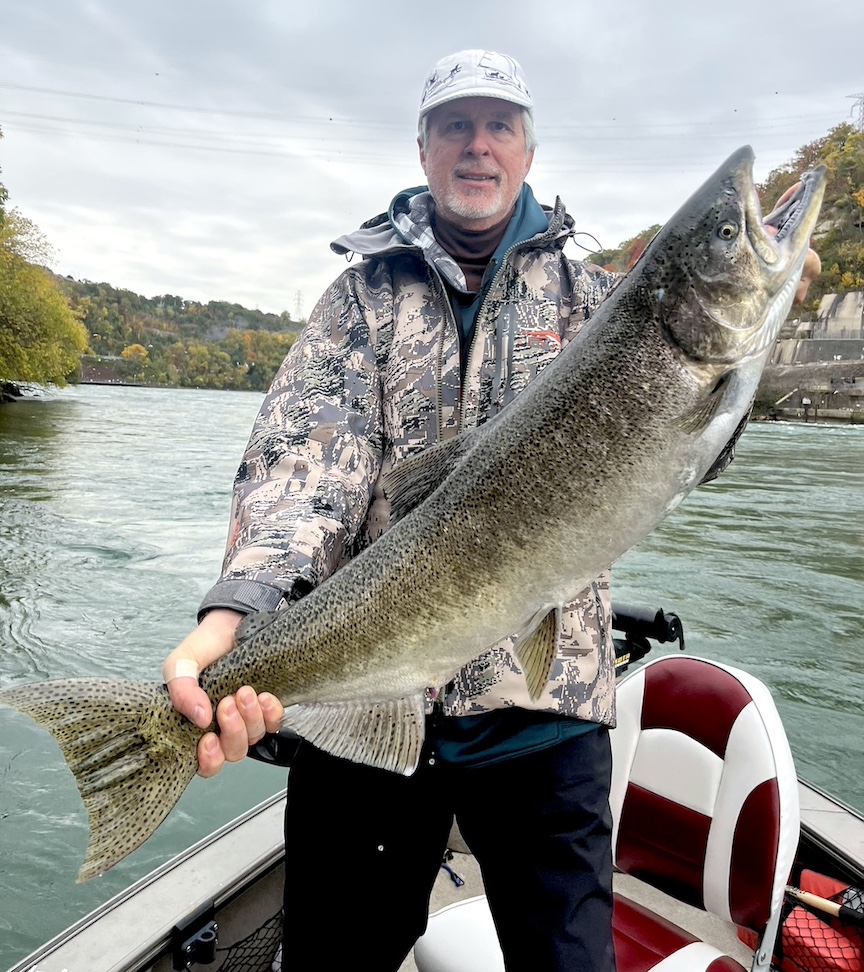
By Capt. Frank Campbell
Director, Outdoor Promotions
Destination Niagara USA
The calendar tells us it is fall. So, too, Mother Nature gives us signs such as the color of the leaves changing, shorter days, cooler nights and also the return of the Pacific salmon to their native tributaries.
The salmon run is a homecoming event that anglers look forward to year after year, as adult or mature salmon leave Lake Ontario to take part in their spawning process to complete their lifecycle and start the new generation of salmon. Most of the salmon here in Niagara County are stocked by the New York State Department of Environmental Conservation. The first chinook or king salmon were stocked into Lake Ontario back in the 1960s to help control the alewife populations; they have since become a major draw to anglers from all over the country. The life cycle of chinook salmon is fascinating and goes something like this:
√ Spawning occurs in the tributaries with female salmon digging out nests or beds often referred to as redds. As the female deposits the eggs, the male fertilizes the eggs in the gravel beds and, soon after, both male and female salmon die.
√ The fertilized eggs will remain in the gravel through the winter months and will hatch sometime in the early spring. To be viable, the eggs require cold, oxygen-rich water, and loose gravel to remain hidden from predators that often feed heavily on loose eggs that are exposed.
√ When the salmon hatch in the spring, they are referred to as alevins, which carry a yolk sac to provide nutrients as the young salmon grow. During this stage, the salmon remain hidden in the gravel to avoid predation for a few months.
√ Once the salmon emerge from the gravel, they are free of their yolk sacs and start to feed actively for a few months before starting to head down stream in the direction of Lake Ontario. It is at this stage the fry will develop par marking, which indicates they are going through a process referred to as smolting, which imprints the fish to return to the tributaries in which they were born.
After heading into Lake Ontario, the chinook salmon will spend between two and four years gorging on baitfish such as smelt and alewives to grow quickly, often reaching 20 pounds as adults or mature salmon. It is at this point of their life cycle that the salmon return to their natal tributaries and the circle of life starts again.
In the Niagara River, approximately 100,000 chinook salmon are stocked each year, as the bottom of the river is not conducive to the spawning needs of the salmon, which is a loose gravel bottom. Most of the river bottom is made up of chunk rock, shale, and soft mud/sand. However, for the first time that I can recall, there were young of the salmon found in the Niagara River that were naturally reproduced.
The young salmon were located in decent numbers in few locations, which is great news and tells us some salmon have found the right bottom. Hopefully, this is the beginning of a naturally reproducing population here on the Niagara, as it is estimated that up to 50% of the salmon in Lake Ontario are reproduced naturally. In fact, the NYS DEC has stated that Lake Ontario is going to be managed as a natural reproducing population of salmon enhanced by stocking.
Hopefully, with some cooler weather and rain in the forecast, the salmon run on the Niagara will enable anglers to enjoy the excitement of fighting the king of the salmon, but also start the cycle of life for the most sought-after species on Lake Ontario.
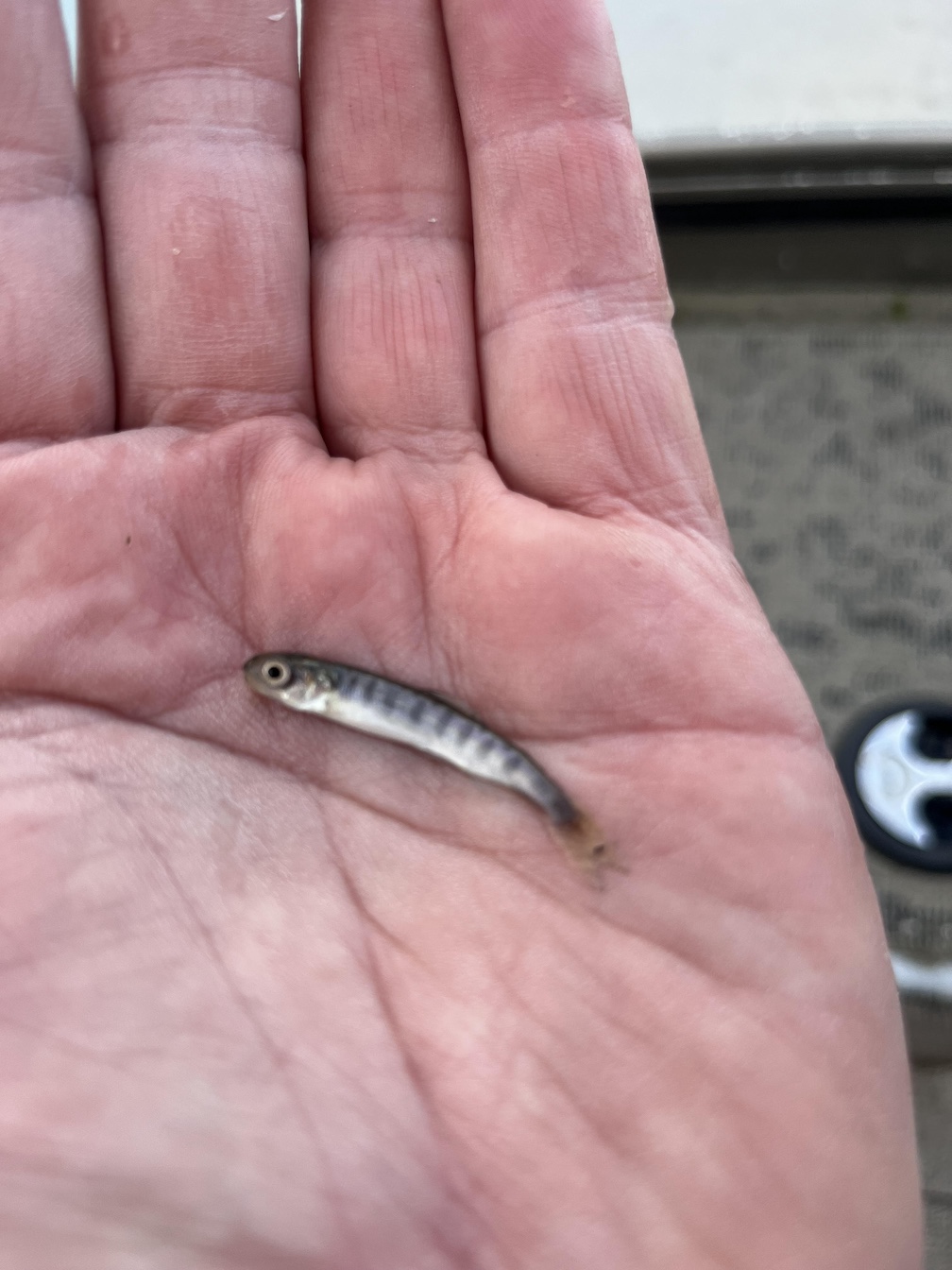
Naturally produced Niagara River salmon. (Submitted photo)




















1859 Whitehaven Road, Grand Island, NY 14072
Phone: 716-773-7676
Fax: 716-773-7190