


+70
°
F
+74°
+58°
Niagara Falls
Thursday, 16
See 7-Day Forecast
Featured News - Current News - Archived News - News Categories
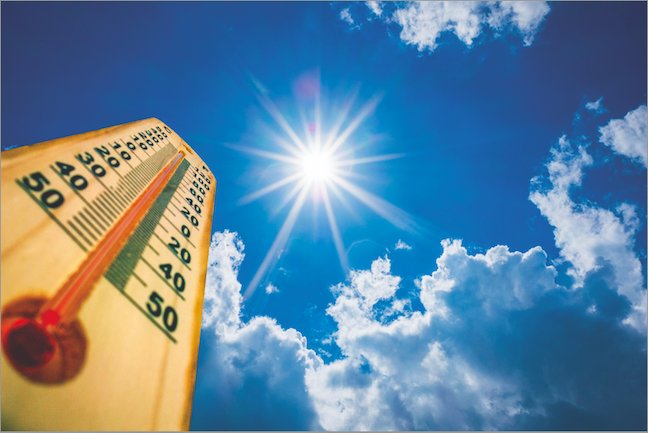
New Yorkers encouraged to prepare themselves through Citizen Preparedness Corps; text their county or borough to 333111 to receive real time emergency and weather alert texts directly to their phones
Submitted by the Office of Gov. Kathy Hochul
Gov. Kathy Hochul updated New Yorkers on the state’s preparedness and response capabilities to extreme weather. She has made it a top priority to invest in the state’s capabilities to prepare for, and respond to, all types of extreme weather.
“New York state is no stranger to extreme weather, and New Yorkers must be prepared for the myriad of severe weather events that come our way,” Hochul said. “Keeping our state safe and protected is my top priority, and my administration is committed to ensuring accessible emergency weather preparedness and an all-hands-on-deck approach to response and recovery operations as severe weather threats increase.”
New York has one of the nation’s most diverse threat landscapes, especially when it comes to the threat of extreme weather. Since taking office in 2021, weather-related natural disasters have resulted in eight major disaster declarations, five emergency declarations and one Fire Management Assistance Grant declaration from the federal government, as well as the declaration of at least 19 state Disaster Emergencies by Hochul herself.
The diversity of natural threats has been wide ranging, too. In 2024 and 2025, New York has:
New York State Division of Homeland Security and Emergency Services Commissioner Jackie Bray said, “Extreme weather events are now the norm, so being prepared is our best defense. We are fortunate to have a governor that not only understands this, but actively does something about it. The significant investments Gov. Hochul has made in training, equipment, planning and staffing have prepared us to support our local partners and all New Yorkers when a severe weather emergency strikes.”
New York State Weather Risk Communication Center Director Nick Bassill said, "New York is leading the nation in building a strong connection between weather experts, emergency managers and the public – which is critical as our state faces increasingly frequent and extreme weather. From hurricanes to lake-effect snow and everything in between, the state Weather Risk Communication Center at UAlbany is working daily to help state and local emergency managers better prepare for and respond to severe weather events. I’d like to thank Gov. Hochul and Commissioner Bray for their continued support and remain committed to making our communities safer and more resilient.”
State preparedness, response & recovery operations
The New York State Division of Homeland Security and Emergency Services’ Office of Emergency Management is New York’s primary conduit for emergency preparedness and response operations for all emergencies, both natural and human made. During emergencies, OEM not only coordinates with local emergency responders to support local operations, but helps coordinate the deployment of thousands of state personnel and pieces of equipment from numerous state agencies.
OEM is also home to the State Watch Center, which is staffed 24/7/365 to monitor hazardous activity throughout the state and ensure situational awareness for state leaders. Additionally, OEM maintain nine stockpiles located throughout the state that are able to provide emergency response assets and supplies as needed.
Along with emergency management, training first responders from all disciplines is a core mission for the division. Whether online, or in-person, over 54,000 firefighters, emergency managers, officers and other first responders received some form of training from the division, including the 4,778 students who received training at the state’s Academy of Fire Science in Montour Falls. Separately, nearly 10,000 state and local first responders received training at the New York State Preparedness Training Center in Oriskany – one of the nation’s premier first responder training facilities.
The division is also home to the Office of Disaster Recovery Programs, which is responsible for the legwork necessary for obtaining federal disaster declarations and administering the federal recovery dollars that flow to communities as a result. Since 2021, the division has issued payments totaling $12.36 billion in federal public assistance recovery funding and $410.6 million in hazard mitigation assistance funding.
Individual preparedness
In any emergency situation, individual preparedness is one of the most critical components of an effective response, and the state offers New Yorkers a number of different ways to not only stay prepared, but stay informed as well.
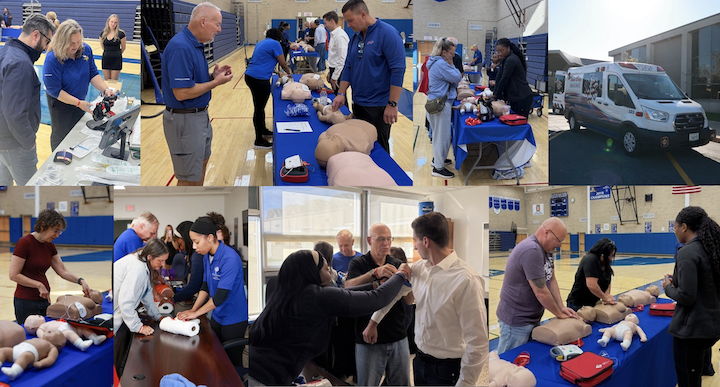
The New York State Citizen Preparedness Corps (CPC), administered by the division and the New York National Guard, was established in 2014 to train New Yorkers how to prepare for emergencies and disasters, respond immediately and recover as quickly as possible to pre-disaster conditions. Nearly 433,000 New Yorkers have taken CPC training in community settings throughout the state.
CPC trainings are free and held in-person throughout the state. New Yorkers can find a local training and enroll online at the DHSES website. For those unable to attend in person, courses are also available online in English and with subtitles in 12 additional languages.
Additionally, Hochul announced a new, real-time emergency and weather alert system earlier this year as part of the state’s Hurricane Preparedness Week recognition efforts. Managed by the division, this text option allows New Yorkers to text the name of their county or borough to 333111 to receive real-time emergency and weather alerts and updates directly to their phones. New Yorkers should also remember to follow their local forecasts and visit the DHSES Facebook page, follow @NYSDHSES on X, or visit dhses.ny.gov for important safety information.
Heat waves and other extreme heat events are likely to happen again this summer, and New York state agencies are working to implement initiatives recommended by the state’s extreme heat action plan to help New Yorkers prepare for heat’s negative health and environmental impacts. In June, New York marked significant progress on the first year of implementation of the Extreme Heat Action Plan (EHAP) with the first readiness update now available. The EHAP, led by DEC and NYSERDA along with DHSES and DOH under the direction of Hochul, includes nearly 50 actions by state agencies to address extreme heat impacts across four tracks (local planning and capacity building, community preparedness and workers’ safety, resilient buildings and access to cooling, and advancing ecosystem-based adaptations). The full update on implementation progress is available here.
The state Department of Environmental Conservation closely monitors air quality conditions statewide and works with the state Department of Health to issue timely public health advisories that millions of New Yorkers depend on each year. Visit DEC's website for updated forecasts and information about air quality index levels, and the Department of Health website for information on health risks and precautions related to air quality.























1859 Whitehaven Road, Grand Island, NY 14072
Phone: 716-773-7676
Fax: 716-773-7190