

+70
°
F
+74°
+58°
Niagara Falls
Thursday, 16
See 7-Day Forecast
Featured News - Current News - Archived News - News Categories
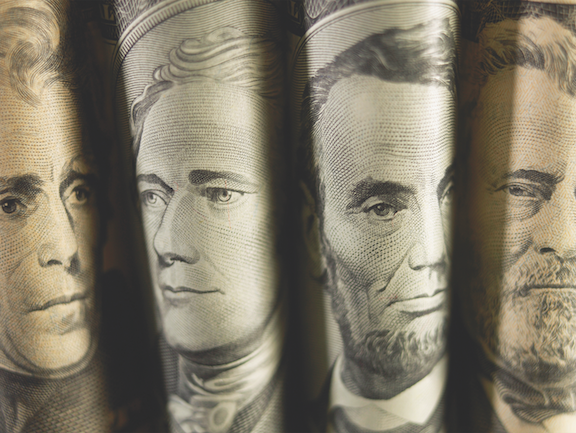
Commission adopts multiyear joint proposal
Press Releases
The New York State Public Service Commission has adopted a joint proposal establishing three-year electric and gas rate plans for National Grid signed by 15 parties, including the company, Department of Public Service staff, consumer advocates, trade and labor groups, and large industrial customers. The commission’s action will significantly reduce the company’s request for total electric delivery revenues by over $340 million (67% decrease from request) and total gas delivery revenues by nearly $100 million (63% decrease from request) in the first year. The adopted joint proposal delivers $110 million in annual efficiency savings, defers nonessential capital projects, and supports energy affordability programs and protections for vulnerable customers.
National Grid had sought a base delivery increase of $509.6 million (25.5% delivery or 10.4% total revenue) and $156.5 million (29.7% delivery or 15.7% total revenue) for electric and gas, respectively, for one year. Instead, the commission adopted a joint proposal establishing levelized increases, on a percentage basis, to the company's electric revenues of $167.3 million in the first year, $297.4 million in the second year, and $243.4 million in the third year. Levelized revenues to the company's gas revenues are $57.4 million, $64.5 million and $71.8 million, respectively, in each of the upcoming rate years beginning Sept. 1, 2025. National Grid, previously known as Niagara Mohawk Power Corp., provides utility service to 2.3 million customers in upstate New York.
“The adopted joint proposal meets the legal requirement that the company continue to provide safe and adequate service at just and reasonable rates,” commission Chair Rory M. Christian said. “The three-year rate plan is in the public interest. It is a forward-looking plan that benefits customers and includes provisions that further important state and commission objectives, while keeping customer affordability first and foremost in mind.”
The joint proposal was submitted by 15 parties, including the company, department staff, multiple intervenors, New York Solar Energy Industries Association, and Alliance for a Green Economy. Other parties who signed onto the joint proposal include the Independent Power Producers of New York, NYGEO, Turning Stone Enterprises, the U.S. Department of Defense, Fedrigoni Special Papers North America, Empire Natural Gas Corp., New Yorkers for Clean Power, the New York Power Authority, and IBEW Local 97. Additional active parties, including the Environmental Defense Fund, did not oppose the joint proposal.
This adopted rate plan reflects capital investments of approximately $4.3 billion for electric and $1 billion for gas to ensure the company can continue to provide safe and reliable service to its customers. The adopted joint proposal reflects increased outreach for the recently expanded energy affordability program, enhanced performance metrics, and it is supportive of the objectives of the state’s climate goals. This joint proposal was made available for public comment, and nearly 9,000 public comments were reviewed and considered.
Gov. Kathy Hochul made it clear the original rate proposal was too high. At her direction, the Department of Public Service, the staff arm of the commission, scrutinized National Grid’s rate case to prioritize affordability. It’s the commission’s responsibility to find the right balance between the resources needed to ensure system reliability and minimize costs to ratepayers. The commission believes these agreements found the best possible path forward in this case.
The main rate drivers in the first year of the electric and gas rate plans are attributable to capital investments to maintain safety and reliability, including leak-prone pipe replacement; increases to operation and maintenance expenses to provide the company the ability to operate the electric and gas businesses; and a return on equity that reflects market conditions and allows the company to obtain funding for its capital investments at reasonable rates. In the second and third year of the rate plan, the increases are primarily driven by increases to O&M expense, depreciation expense, property taxes, and additional capital investments.
The adopted joint proposal continues or enhances numerous provisions in the prior rate order such as customer service performance metrics, gas safety metrics, low-income and energy affordability provisions. The adopted joint proposal also encourages the company to pursue non-pipeline alternatives.
The adopted joint proposal will result in a total electric revenue increase, on a levelized basis, of 3.4% in the first year, 5.6% in the second year, and 4.6% in the third year. For gas, the increase in total revenues, on a levelized basis, will be 5.5% in the first year, 5.5% in the second year, and 6% in the third year.
As part of the rate-setting process, department staff reviewed and considered the almost 9,000 public comments submitted in the proceeding. The commission also held three in-person public statement hearings, a virtual public statement hearing, as well as an evidentiary hearing, a procedural hearing, and a technical conference.
For more, visit www.dps.ny.gov.
Responses
Republican New York State Sen. Rob Ortt said, “At a time when families across New York are already stretched thin trying to cover everyday expenses, the Public Service Commission’s decision to approve energy rate hikes for National Grid and Central Hudson customers adds yet another burden. These rate hikes will make it even harder for hardworking New Yorkers to make ends meet.
“Make no mistake, these rising energy costs are not happening in a vacuum. They’re a direct consequence of the New York Democrats’ Green New Scam. By imposing unrealistic energy mandates and banning reliable energy sources, Albany Democrats have driven residential electricity prices nearly 40% higher than in neighboring Pennsylvania.
“Instead of forcing costly mandates and engaging in political virtue-signaling, it’s time for a new direction. New York needs an all-of-the-above energy strategy, one that encourages domestic production, expands consumer choice, and most importantly, lowers prices for New Yorkers.”
Hochul said, “While I appreciate that the New York Public Service Commission worked to significantly lower the outrageously high initial rate proposals, it’s still not enough. I have been crystal clear that utilities must make ratepayer affordability the priority. Since taking office, my administration has prioritized energy affordability, particularly for our most vulnerable, and we need the utilities to take it seriously as well. That means at a time when worried New Yorkers are being forced to tighten their budgets, all utilities must follow suit. This is no time for bonuses and big raises for executives, especially if they are going to be looking to raise rates on their customers.”
Phil DeCicco, National Grid’s New York general counsel, said, “We understand affordability is top-of-mind for our customers. In reaching this settlement, we have collaborated with various parties and organizations to strike a balance that prioritizes energy affordability while ensuring grid resiliency – especially considering the record number of damaging storms we’ve seen in upstate New York.”
He added, “Energy demand is expected to increase in coming years. This rate plan is critical to assure National Grid's ability to maintain reliability, resiliency, and cost-effectiveness of the energy systems that serve more than 2 million upstate New York customers. It also offers new and targeted programs to better meet the needs of our customers and communities.”



















1859 Whitehaven Road, Grand Island, NY 14072
Phone: 716-773-7676
Fax: 716-773-7190