


+70
°
F
+74°
+58°
Niagara Falls
Thursday, 16
See 7-Day Forecast
Featured News - Current News - Archived News - News Categories
For large-scale living shoreline restoration project along Gill Creek in Niagara Falls’ Hyde Park
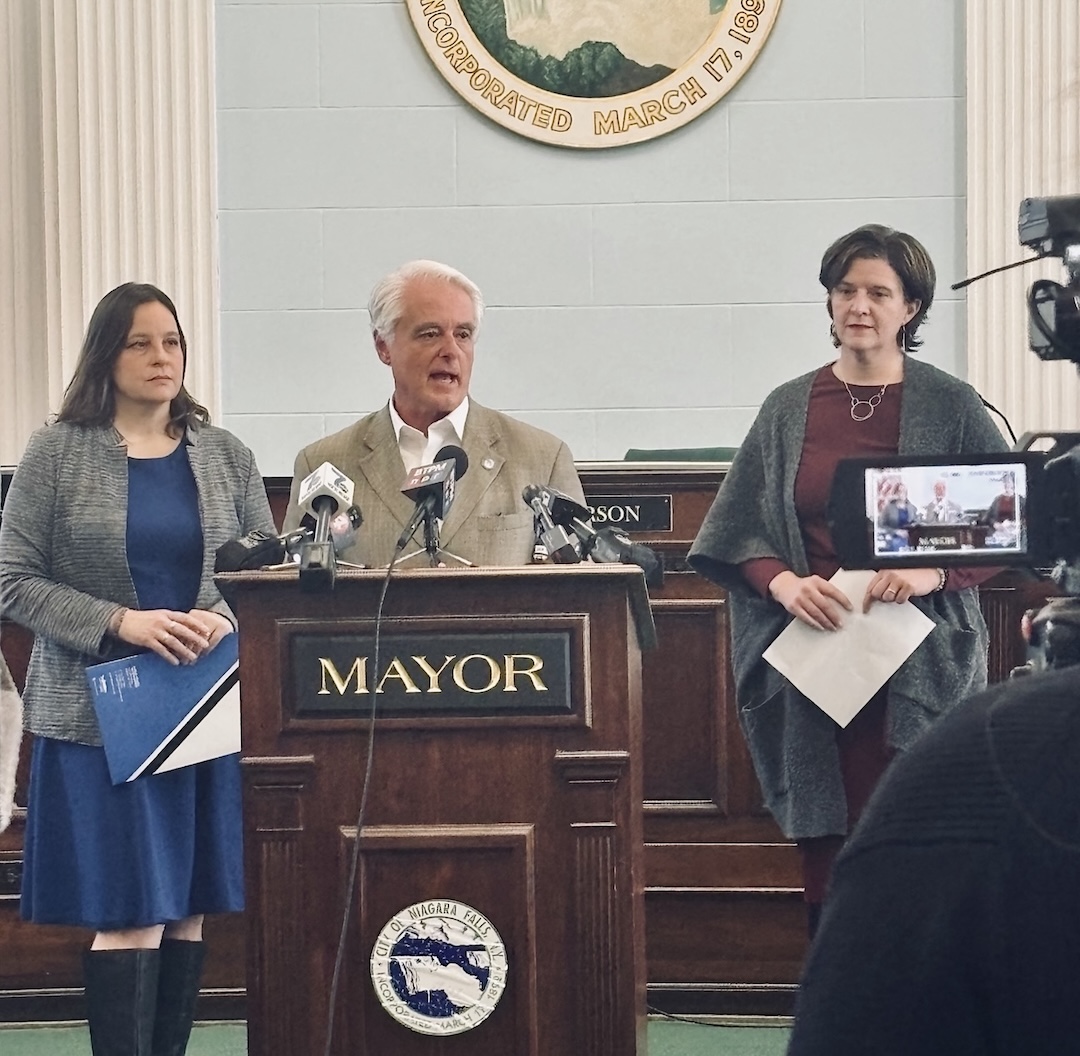
√ Mayor, BNW executive director & DEC regional director announced large state investment in Niagara Falls on Wednesday to improve water quality, restore habitat, build climate resilience
Buffalo Niagara Waterkeeper press release & photos
Buffalo Niagara Waterkeeper was awarded $2 million through the New York State Department of Environmental Conservation’s Water Quality Improvement Program (WQIP) to implement a large-scale living shoreline restoration project along Gill Creek in Niagara Falls’ Hyde Park.
The funding will support the Gill Creek living shoreline implementation project, a nature-based restoration effort that will stabilize eroding streambanks, improve water quality, restore native habitat, and increase climate resilience at three sites along the west bank of Gill Creek in Hyde Park – a highly impaired tributary to the Niagara River.
Gill Creek is a historically impaired waterway, where decades of erosion, stormwater runoff, and nutrient pollution have contributed to harmful algal blooms, degraded habitat, and limited public access. The project was identified through extensive community engagement and builds on Buffalo Niagara Waterkeeper’s Gill Creek conceptual restoration plan. This effort will help advance progress being made in this creek system in recent years through a partnership with the City of Niagara Falls for the implementation of several other restoration efforts in Hyde Park Lake.
Planned improvements through this WQIP project include:
•Stabilization of nearly 3,000 linear feet of shoreline using native vegetation and green infrastructure;
•Restoration of approximately 7 acres of riparian habitat;
•Conversion of mowed lawn and degraded streambanks into resilient natural areas;
•Improved informal access for fishing and passive recreation; and
•Reduced sediment and phosphorus pollution entering Gill Creek and downstream waters.
Construction is anticipated to begin in spring 2027, with planting completed by late-summer, and an establishment and monitoring period extending through 2028.
Gill Creek is a main tributary to the Niagara River, and a key waterbody that influences the health and integrity within the federally designated Niagara River “Area of Concern.” The Gill Creek living shoreline project will support regional and state priorities to restore habitat within the Niagara River Area of Concern, reduce flood risk, and strengthen climate resilience through ecosystem-based solutions.
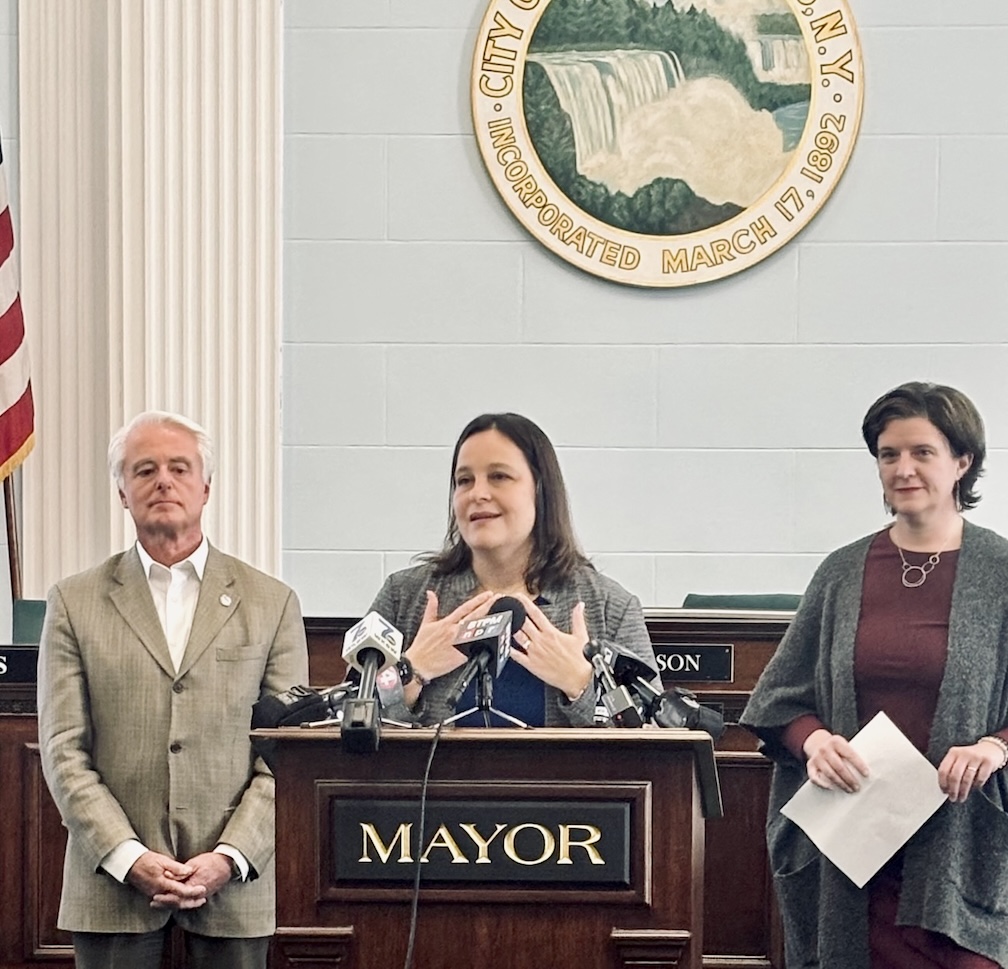
“This much-needed investment allows us to move from planning to action,” Buffalo Niagara Waterkeeper Executive Director Jill Jedlicka said. “By deploying proven, nature-based solutions in this creek system, we are improving water quality, reducing erosion and flooding risk, and creating healthier, more accessible green space for the Niagara Falls community. This project demonstrates how strong nonprofit and municipal partnerships like ours can utilize strategic state investments to deliver multiple benefits that include cleaner water, stronger communities, healthier ecosystems, and long-term resilience in the face of climate change.”
Niagara Falls Mayor Robert Restaino said, “Niagara Falls is fortunate to have a strong and collaborative partner in Buffalo Niagara Waterkeeper to lead this initiative in order to improve and enhance a vital natural resource for our city and region in Gill Creek. As we all know, the public health and safety of our community is predicated on having clean and accessible waterways for our residents. The hard work to revitalize Gill Creek will benefit residents of our city for generations to come.”
DEC Commissioner Amanda Lefton said, "Gov. Kathy Hochul’s continued commitment to investing in sustainable water quality improvements is helping communities across New York state, including in places like Niagara Falls, which has disproportionately borne the burden of industrial pollution for decades. Buffalo Niagara Waterkeeper’s living shoreline restoration project along Gill Creek in Hyde Park, supported through DEC’s $2 million successful WQIP program investment, will benefit the environment by restoring habitat and improving water quality within the Niagara River watershed.”
Previous investment into Buffalo Niagara Waterkeeper’s Gill Creek community-driven restoration planning and design by the City of Niagara Falls and the Niagara River Greenway Host Community fund was the catalyst needed for the organization to secure and bring another $2 million into our local communities. Once completed, the total project cost of this latest effort will be approximately $3 million, with the additional funding anticipated to be secured through local and regional partners.
For more information about the project, visit https://bnwaterkeeper.org/gill-creek-restoration/.
Buffalo Niagara Waterkeeper is a community-based nonprofit organization that protects and restores waters and surrounding ecosystems for the benefit of current and future generations. For over 35 years, Buffalo Niagara Waterkeeper has been the guardian of Western New York's fresh water, protecting clean water, restoring the health of ecosystems, connecting people to the water, and inspiring sustainable economic growth and community engagement. For more information, visit www.bnwaterkeeper.org.





















1859 Whitehaven Road, Grand Island, NY 14072
Phone: 716-773-7676
Fax: 716-773-7190