


+70
°
F
+74°
+58°
Niagara Falls
Thursday, 16
See 7-Day Forecast
Featured News - Current News - Archived News - News Categories

Behind the Screens with Joshua Maloni
IG: @imjoshuamaloni
“Transplant” ended its third season with the fate of its two main characters very much up in the air. Dr. Bashir “Bash” Hamed (Hamza Haq) was again experiencing time and memory lapses, and Dr. Magalie “Mags” Leblanc (Laurence Leboeuf) – while celebrating her dream job – was told a new heart was awaiting her at Canada’s York Memorial.
And their relationship with each other? Well, that’s also undecided.
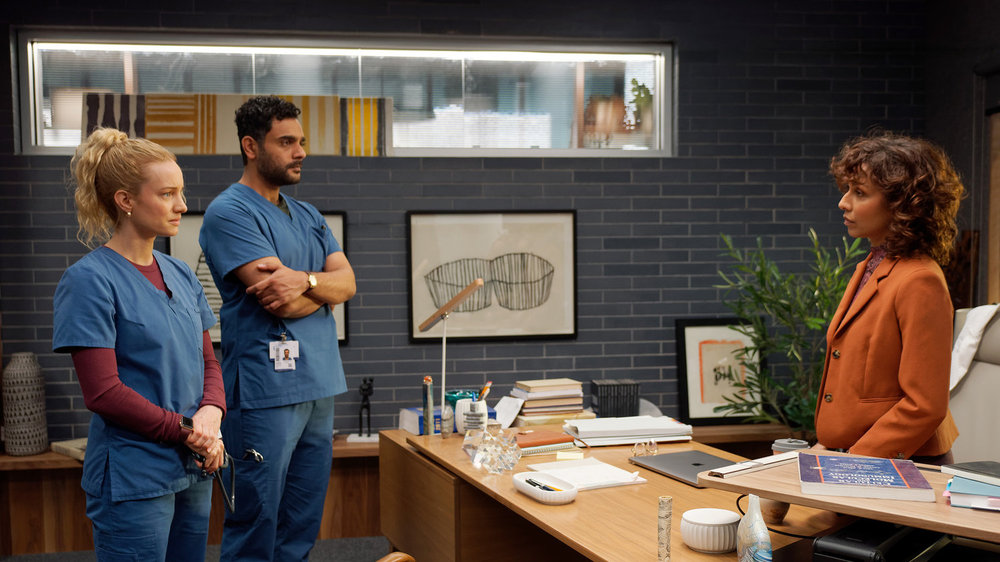
Laurence Leboeuf as Dr. Magalie “Mags” Leblanc, Hamza Haq as Dr. Bashir “Bash” Hamed, and Rekha Sharma as Neeta Devi. (Photo by Yan Turcotte/Sphere Media/CTV)
••••••••
Season four debuts at 8 p.m. Thursday on NBC.
While the program is still relatively new to U.S. audiences, the Peacock network noted, “ ‘Transplant’ has routinely ranked as a Top 20 series on CTV, where is also airs, and has remained the most watched Canadian drama series each broadcast year. The show has amassed 32 Canadian Screen Award nominations and collected 18 wins, including two for Best Dramatic Series. Haq himself has garnered three consecutive Canadian Screen Awards for his portrayal as Bashir Hamed.”
Haq shared more in this edited Q&A.
BTS: So, as I was sitting here (on Zoom), I was thinking about new TV season – and it occurred to me that I get a feeling in my stomach that I would liken to going to a sporting event, or even the first day of school. But obviously, I'm just a viewer; I'm just a fan.
For you, as the star of the show, I'm wondering if you get excited for the premiere – and not knowing where you are in the world or what you're working on, do you have plans to watch it on Thursday?
Hamza Haq: So, the fun thing is that we wrapped filming this two years ago. I'm in Canada. We aired this already. It's kind of getting a resurgence in the states, being aired for the first time there, as a Canadian property, and crossing borders that way.
The cool thing was, when I did press for this, like, a couple of weeks ago, I binged the entire season again, because it was available to us here. So, in that way, I was very excited, because I guess while you're working on things, and once they come to a close, I guess there's this almost toxic need to move on. And just like, “All right, I put that to bed,” and everything like that. But now to have had a little bit of distance from it, and come back and revisit it, I just got to watch it for the first time as a fan, and not as like, “OK, I need to be able to pitch this,” or “I need to be able to sell this,” and I just got to really, slowly take my time watching it. Binge it the way that a fan or a consumer would.
I thoroughly enjoyed watching it. And I think it was my first time taking the time to really watch it, not just look out for the things that I think people are going to ask me about it.
I really enjoyed it. It's a great show!
WATCH:
BTS: The season finale had the things that we want in a season finale: We've got the major characters’ storylines in flux. I'm not going to ask you for the resolution, but I am going to ask you for the timeline. Where do we pick up when the premiere starts? Has time elapsed, or are we going right back to where it ended?
Hamza Haq: I think, from the finale of season three, we're picking it up a little bit afterwards. People have moved on in several aspects of their lives.
I can give a bit of a spoiler, because it is season four. But, obviously, at the end of season three, Bash and Mags decide that their relationship is no longer viable, and that they're going to take some time apart, or that they're just going to go forward separately. So, when we pick up, a certain amount of time has passed, and they both find out that they will be competing for the same job. So, there's instantly a dynamic that we have to face, and that their involvement in each other's lives is far from finished – because now they're in direct competition with each other – which is also kind of sexy, and keeps them connected in that way.
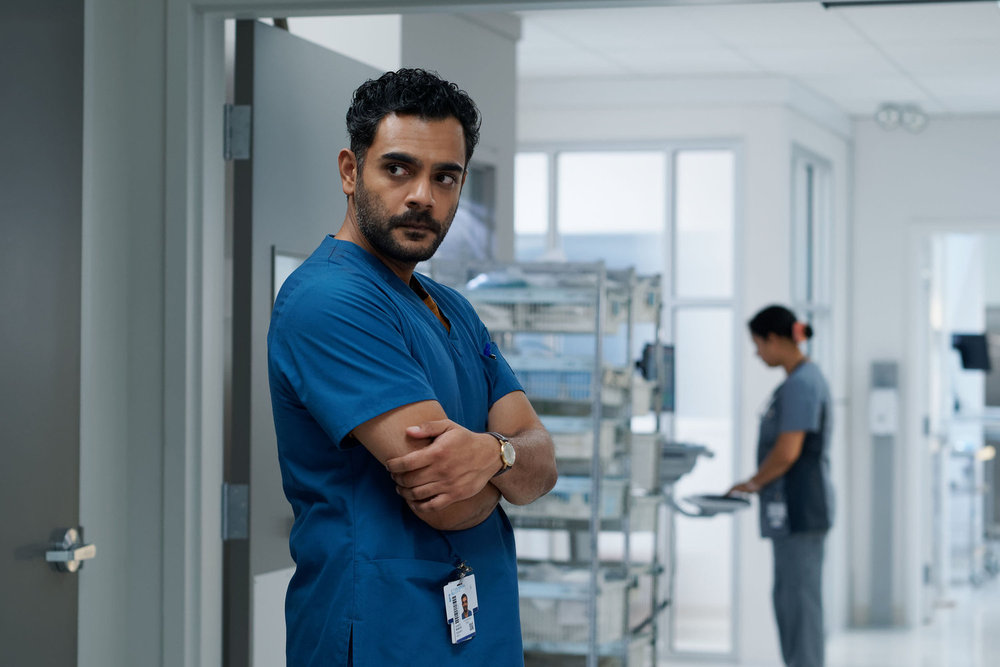
Hamza Haq as Dr. Bashir “Bash” Hamed. (Photo by Yan Turcotte/Sphere Media/CTV)
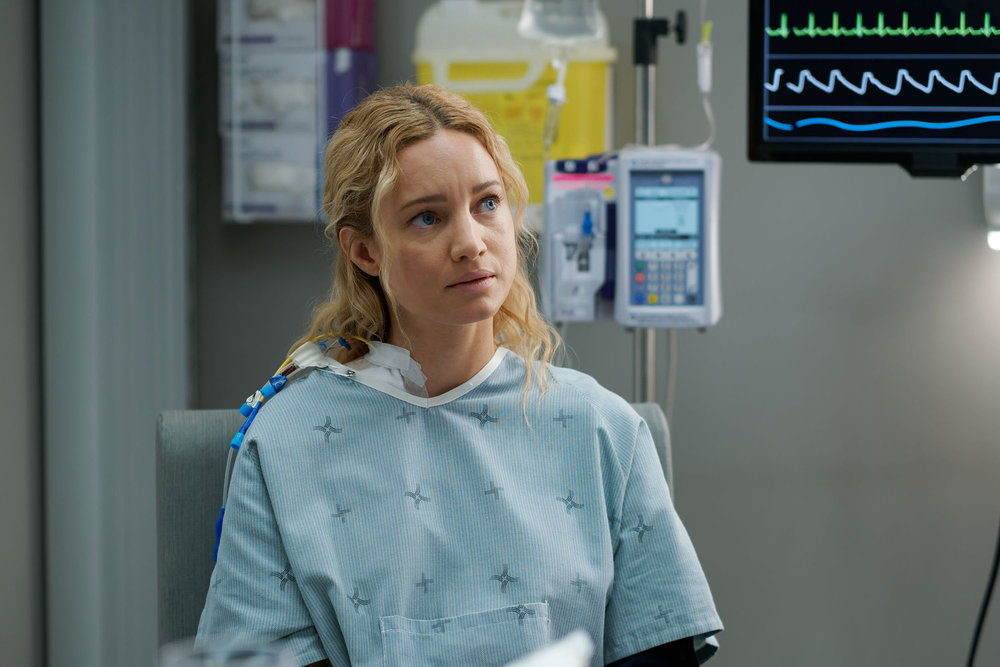
Laurence Leboeuf as Dr. Magalie “Mags” Leblanc on “Transplant.” (Photo by Yan Turcotte/Sphere Media/CTV)
••••••••
BTS: When you film a season finale and then you take a break and you have to pick up and get right back into character and right back into these stories, how difficult or challenging is it? What is your process as an actor of laying that character down, having some sort of time elapse, and then picking it back up?
Hamza Haq: I've had a good coach throughout the tenure on this show, and we, after a while, you get comfortable with it. So, the difference in how long it took, or how difficult it was to slip the boots back on, or what have you, it was harder between season one and two, and then when we had a six-month break.
The great thing about it is, when you inhabit the character, and you find the little things that, you know, Bashir had these mannerisms that I had picked up over the over the seasons, and I would just sit in that. I would maybe watch an episode or two, but there were certain animals that I was channeling, for those who are interested in that process of it, that there were certain animal mannerisms that I put into that work, as well.
After you really inhabit it, I lived in Bashir’s skin longer than I didn't throughout the year, because our production schedule was eight months of the year. So, maximum, I would have three to four months off, if that, because when you get back into prep, and you get back into all of that.
But, after a while, it's like putting on an old pair of jeans that you've broken into. It's just like, “Alright, cool.” You know, maybe I put these in the dryer. Maybe I put these in the wash and they're just a little bit stiff. So, so long as I just go for a walk in them, by the third take, we’re there for the rest of the season.
BTS: This is a character that has evolved a lot since we saw him in the pilot, obviously, from the accident to where he is now. A lot of growth has happened.
I want to ask you about believability, because when I see you on screen, I believe you are this doctor. I believe you've had these experiences. I believe you are making decisions based on his past. But that's his history. The medical training, the personal things and the violence and everything that he had seen and been through, that's his history, right?
So, what is the process for you in helping us to feel like that's you – that you're making decisions based on those things that have happened? What is the key to making that as believable as you do each episode?
Hamza Haq: It's recognizing that it's not me, first. It's recognizing that I'm not a refugee. I didn't come from this horrible circumstance. I was never forcibly displaced out of my country, and I never had to start over in that regard.
Recognizing that first and empathizing with what he went through is key.
I would never delude myself into thinking that, like, I am Bash and he is me. I truly am not. I don't even speak the same language as him. I had to learn that while we were doing that, as well. So, I think that is the first key.
Secondly, my process was any of it can be dropped down to a single emotion or a single experience. I was first hired on “Transplant” to be a character consultant, so we put a little bit of my experience into how he saw the world. And if I can relate to his world outlook, I can bring what I know about that. So, like, in the sense of, “Is he scared? Is he worried about getting a job? Is he worried about how he's going to take care of his little sister?” When we started filming this, I was 27. I had a 1-year-old. I, you know, we work as actors. We don't really know what the next paycheck is going to come from, and everything, and we're committed to it. So, that was an easy enough stretch.
There's feeling like the other just as a result of being a brown Muslim man in the world, living in North America, and there's a sense of isolation, and there's a – I wouldn't say a chip on your shoulder, but there's a hesitation with feeling like you belong anywhere. I’m Pakistani through my heritage, but I never lived in Pakistan long-term. So, to not have a sense of what home is, that's there, as well.
You know, I grew up in the Middle East where that wasn't considered my home. And then we moved to Canada, and it took years before we got our citizenships. And even then, I'm a hyphenated Canadian, so it's just like, “Alright, what is that feeling?” And you just substitute a lot of those emotions with that.
As far as the medical work is concerned, we just have great consultants and a lot of choreography and a lot of training and everything like that. So, you lend your experience to him, and you allow his experience to bleed in with you, knowing that they're separate. But if I can suspend that disbelief that our experiences are separate, then, hopefully, if I can get to it truthfully, that resonates with the audience, as well.
BTS: I want to ask you about Canada because, unique to my market in Buffalo, we get CBC, CTV; we get “Heartland” and “Hudson and Rex,” and all the Jason Priestley things.
Hamza Haq: (Laughs)
BTS: But, unlike a lot of other networks and programming, we don't get a lot of information about those networks, or those shows, or about the culture of filming in Canada. Tell me about the vibe of filming in Canada.
Hamza Haq: We respect our unions. We work hard.
I feel like it's the same on a lot of sets. I've worked on sets in South Africa, Saudi Arabia and Pakistan. Those are international sets that I've worked on. And there's just, like, a professional courtesy that may not exist in certain places; but I certainly know that we really take care of each other, and it is very communal.

Pictured, from left: Jim Watson as Dr. Theo Hunter, Laurence Leboeuf as Dr. Magalie Leblanc, Hamza Haq as Dr. Bashir Hamed, Rekha Sharma as Dr. Neeta Devi and Ayisha Issa as Dr. June Curtis. (Photo by Yan Turcotte/Sphere Media/CTV)






















1859 Whitehaven Road, Grand Island, NY 14072
Phone: 716-773-7676
Fax: 716-773-7190