


+70
°
F
+74°
+58°
Niagara Falls
Thursday, 16
See 7-Day Forecast
Featured News - Current News - Archived News - News Categories
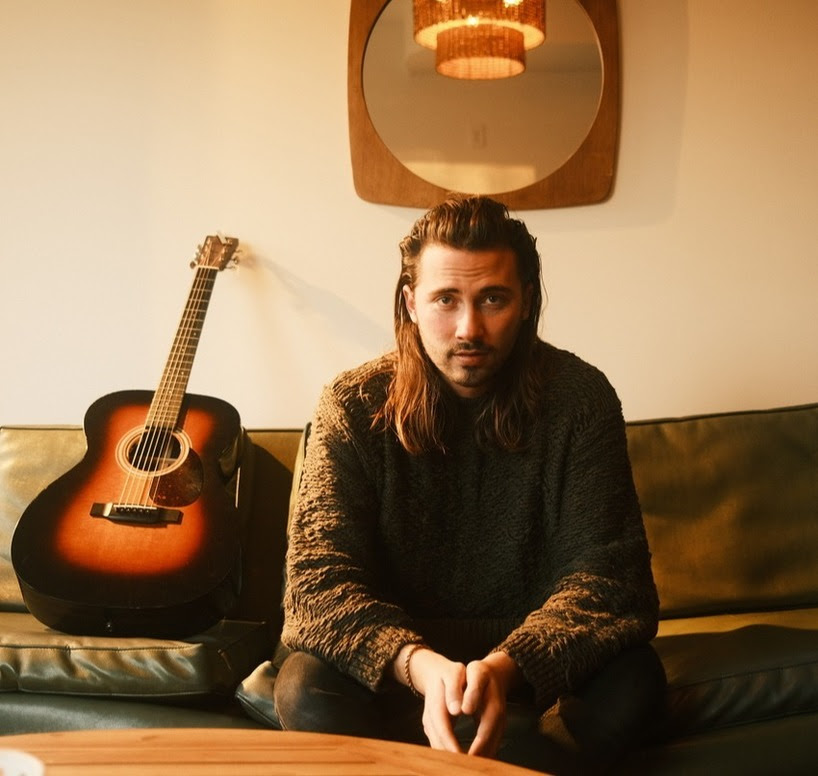
Preview by Joshua Maloni
GM/Managing Editor
IG: @imjoshuamaloni
So, it's like this: “My birth name is Joseph. And when I grew up as a Joseph – and I always loved nicknames – but Joe or Joey just never really fit. Never thought they clicked. And I was reading a book once, and in that book there was a character. His name was Joseph, but he went by Seph. And I was like, “That's the coolest thing ever. And I want to be Seph” (laughs).
Though Seph Schlueter found a moniker that fit him, it wasn’t an easy sell.
“So, I called a big family meeting, and I'm like, ‘Alright, y'all, you're gonna call me “Seph.” ’ And they were like, ‘No, we're not,’ ” he said in a recent phone interview. “So, I was like, ‘Dang it!’ And so then, when I left home – and right out of high school I joined a ministry called Damascus, which is in Ohio – and I was trying to get them to call me Seph. But some of them knew me as, like, a camper. And so, I was still just Joseph to them. And then when I decided to put out music, I was like, ‘You know, I'm going all in on the Seph thing.’ And so, from that point forward, the ball started rolling, and the pendulum swung to the Seph side. And now most people call me Seph.”
Oh, and his last name? That’s pronounced "shleeter."
While it might be difficult to pronounce his name, it’s easy to see why Schlueter has become a breakout star in Christian music.
Long, flowy hair. Check.
Great voice. Check.
Solid guitar licks. Check.
Singable songs that are both relatable and fun. Check and check.
More than that, there is a wisdom one gleans from speaking with Schlueter, as this writer did ahead of an upcoming Kingdom Bound appearance. Though just 25, the “Counting My Blessings” and “Running Back to You” creator has an understanding of his craft, and his calling, oftentimes reserved for artists twice his age.
Schlueter will perform as part of the concert lineup Tuesday at Darien Lake. For tickets or more information, visit www.kingdombound.org. Schlueter shared more in this edited Q&A.
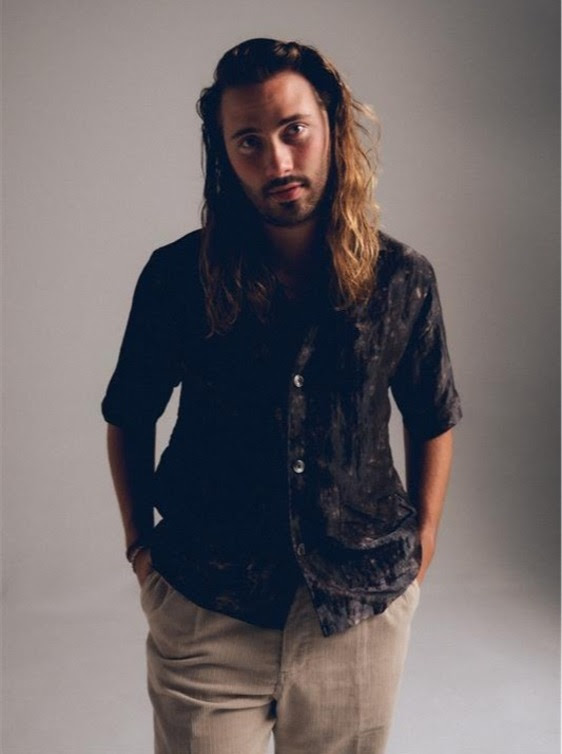
Seph Schlueter images courtesy of Merge Public Relations.
••••••••
Q: When I was looking into some of the things that you did prior to your music career, I saw you were a missionary for seven years. Is that right?
Seph Schlueter: Yeah, still am. Right out of high school, I joined this community called Damascus, which is in Centerburg, Ohio. It's a missionary community that has a 500-acre property where they run camps and retreats and events all around, bringing particularly like youth and young adults to encounters with Jesus. I joined there. I was on summer staff in 2017, and then joined their full-time staff in 2018; and I've been there since.
Q: One of the things about being a missionary, whether it's domestic or whether it's foreign, is a lot of times you're in places that are a little bit more isolated, maybe it's a little bit lonelier. You're certainly not in major metropolitan cities. When you look at that as sort of a starting point, and then you look at where you are now with your career – and these are some stats that your team sent over. These are a couple months old, but 4.3 billion shortform video views, 185 million global streams, 7 million TikTok creations, 81 million views on YouTube.
How do you juxtapose these two things – of having this missionary start where, again, it's probably a lot of one-on-one, and things that are isolated, to now being so globally known, and to have all these people around the world singing your music?
Seph Schlueter: I mean, it is crazy (laughs). It's so wild to me. But I feel like so much of it is – and this is just what I love to tell people, because they'll talk about, “How did you get to where you're at?” and “How did you do all these things you did?” And I'm like, “I don't know! If I ever figure it out, I'll let you know.”
But one thing I do know is my goal was never to be famous, or to have a viral song, or any of that. For me … I think the cool thing about being a missionary was it just taught me how to serve. It taught me how to die to myself, die to my preference, and just serve the Lord.
And I feel like the Lord just blesses that. You see these biblical stories of, like, David, right? He's told he's anointed, but then he's still in hiding for years. And then he gets closer to the king, but he's on the run for years. He just continued to show up daily and be faithful to the Lord, and the Lord put him in this place.
And I think there's so many stories of people who are just waiting for a season and just devote their lives to serving. And I feel like God just has so much room to work with that, as opposed to when we try to make something happen on our own, in our own timing, instead of just waiting on the Lord. And so, I feel like that's honestly been one of the coolest parts of it, is just seeing how God has used a hidden season to just do some amazing things.
WATCH:
Q: I appreciate your servant heart; what you said about David. These are ideas and concepts, though, that the “secular” world doesn't necessarily know or understand. They don't necessarily see the principles or the purpose. So, when you're writing music and you're trying to connect with them, how do you get them to buy in to this idea that is probably foreign to them? How do you get them to buy into the song, but also to the thought and the spirit behind it?
Seph Schlueter: Yeah, I mean, I think so much of what we get to do is just be passionate about the things we’re passionate about, and people are attracted to that.
I had a friend yesterday who was talking about the Savannah Bananas, this weird, baseball-ish-type thing. I had never heard of them. Well, I heard of them, but didn't know much about them. And he's so passionate about it. And he was just sharing his discovery of them; how fun the game is; and his excitement for it got me excited for something that ordinarily I would have no excitement or interest in.
And I think, honestly, that's like the coolest part of writing music that reaches people, because it's not necessarily trying to water it down. It's honestly just sharing the goodness of it, the excitement of it. Because I think there's something about that that intrigues people. And they're like, “Oh, wait, you're really excited about this. You're really passionate about this. I want to learn more. I want to know more.”
And you know, there are going to be some songs that naturally gravitate towards being really accessible. Like “Counting My Blessings” has billions of uses and views on social media, and it's crazy because gratitude is just something I think anybody, whether you're Christian or not, can resonate with. Then you have other songs that are just very much about Jesus and worshiping him and declaring that he's holy. That might be foreign to someone else, but I think there's still something about the passion behind it that's intriguing.
And so, I think for me, it's just really trying to be honest and genuine to who I am, and share who I love, and hope that that just makes other people excited about it as well.
WATCH:
Q: Counting my blessings is probably one of the hardest things for me to do – not because I'm not blessed, but we tend to think about everything else except for how blessed we are. I feel like that's something that we need to do every day – to take stock of those things.
Tell me a little bit about the heart for this song, and tell me about how challenging it is for people to go and count their blessings – and not just look at the negative in life.
Seph Schlueter: I think it's funny, because I think we forget to count our blessings in two ways. Number one, we forget to count our blessings when good things happen, right? Because, I think we just take it for granted. It's so easy for us. Good things happen. “Oh, that's awesome.” But we're always focused on the next thing. We live in such a short-attention-span-driven world where it's hard for us to even just focus in on the present. We're so busy living in the future. And so, we forget to thank God, or just count our blessings, even when good things happen.
And then we forget when hard things happen. It's so easy for us to just focus on the negative. I remember even seeing, psychologically, we're hardwired to look for problems and look for negative things as like a survival instinct. And so, it's so easy for us to just focus on the negative.
And that's why I think the song has resonated with so many people, because it's a reminder to do something that is actually really good for you. One, from a spiritual perspective, but two, even you see so many studies these days about how gratitude impacts your health, and giving thanks impacts your health, and it helps you mentally – and even physically. Like, there are connections that are being made.
And it's so cool because it's something that, as a Christian, right, we're like, “Yeah, we've known this for years (laughs).” The world’s just kind of catching up to things that we've been aware for a long time. But I do think there's something so hard about it, but something that, when you get in the habit of it, it's so cool.
I also saw somewhere – and I haven't fact-checked this, so, don't take my word for it – but I remember seeing somewhere that the parts of your brain for gratitude and the part for anxiety can't be turned on at the same time. And so, when you actually give thanks, it actually helps shut down anxiety, or worry, in your mind. And I think that's something that we all could use a little more of.
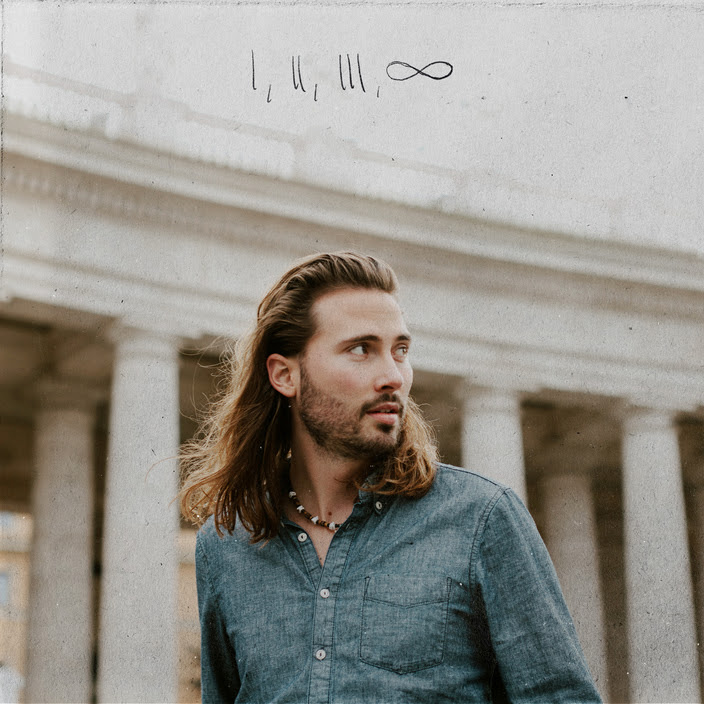
Seph Schlueter images courtesy of Merge Public Relations.
••••••••
Q: You have an album dropping (released July 11). Tell me about it, and how you plan to incorporate that new album into your shows this summer.
Seph Schlueter: Yeah, album coming out, which I'm so excited for. It's been wild, because it's kind of been in the process for a number of years. Some of these songs are songs I've written three, four years ago. And so, to have it all kind of put together is super special for me, because it's really the culmination of four or five years of my history with the Lord, and just different marking moments that are expressed through music.
It's cool already to see people resonating with it. And I love how a song can mean so much. The same song can speak to two people in two totally different ways, or can even speak to the same person. Like, there are songs that I wrote years ago that, when I wrote them, it meant something – and it means something totally different for me now. I think that's just the cool power of music.
I'm excited to share this album with people on streaming platforms. But yeah, like you said, too, just through shows. A number of these songs I've been playing for a while, and now that some of them are coming out, I get to add some new ones to the list, because they'll be out, and people will know them a little bit. I'm excited to just share those, because those are some of my favorites.
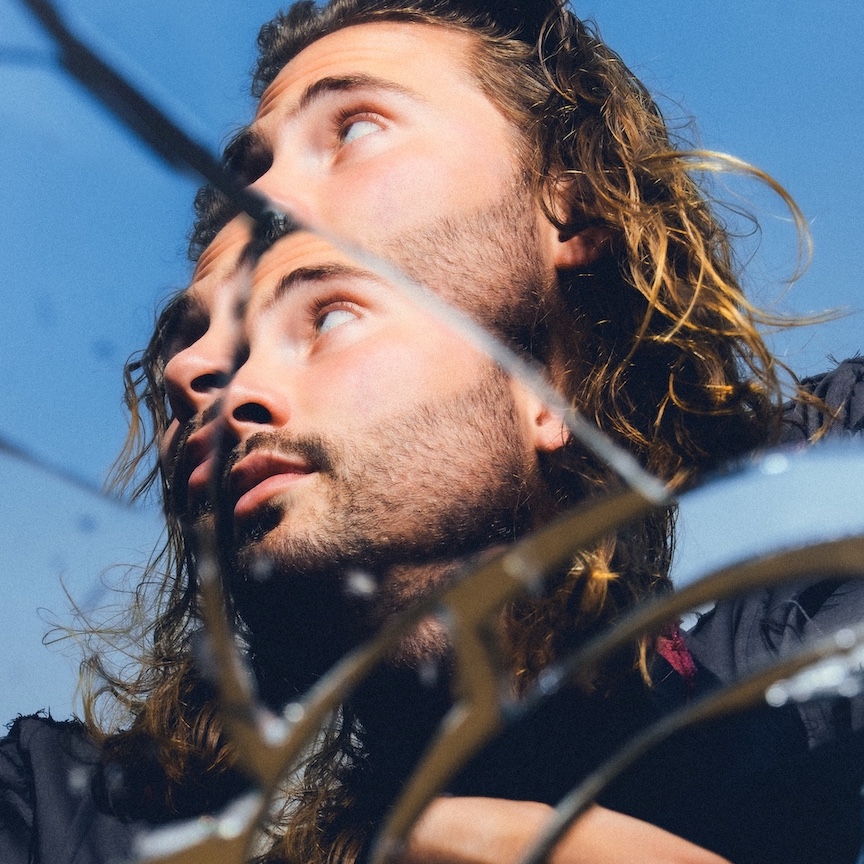
Seph Schlueter images courtesy of Merge Public Relations.
••••••••
Q: You had your first headlining tour in the spring. Coming up this summer, you're playing with CAIN; of course, you've got Kingdom Bound. You're playing with Maverick City Music, Danny Gokey and Ben Fuller in a couple of weeks. You’ve got Elevation Worship and CeCe Winans at Red Rocks, which is awesome. You're playing with TobyMac and We Are Messengers at the Beacon Theater. You’ve got Tauren Wells later this summer. I mean, that's a pretty good docket, right? What are you looking forward to, and what are some of the things you hope to learn from these musicians you'll be sharing stages with?
Seph Schlueter: Yeah. I mean, I think, honestly, the live show part of this whole thing is my favorite part, because it's a time where I really just get to meet the people and see the people who have been listening to the music. And I think that's just so special for me, to worship with them, and just to encounter them and see their stories and the ways that the songs have impacted them. I love getting to do that.
Shows are such a fun way to do that. I love getting to see the different, like, charisms, or different gifts that these other artists get to bring to the stage. I think each of us, we're one body, but many parts, and so each of us kind of carries a different part of God's heart in a different, unique way.
And so, it's always so fun to just see the different ways that different artists get to express that, and what they carry through their music, and the message that kind of resonates throughout their songs. I think that's one of my favorite parts, is just seeing these different artists and what they bring, in terms of message, and just what they carry.
WATCH:
Q: I appreciate that your music videos are very much a real person experiencing real emotions. I think that really emphasizes your songs and your lyrics. But one of the things that I see that you do in these videos is that you are, presumably, lip syncing to your own songs, right?
Seph Schlueter: Yeah.
Q: How hard is that? Especially when I'm watching the “Counting My Blessings” video. That is, like, full-on you just standing there, lip syncing to your song. How many takes does this kind of thing require? How hard is it to lip sync to your own song?
Seph Schlueter: (Laughs) Well, you know, it's funny. So, the “Counting My Blessings” one is hilarious, because we were so rushed for time, because the timeline for everything got moved up really, really quickly. And so, we just, that day, we weren't even planning on shooting a music video; that was just supposed to be content that we could use for social promotions. And they ended up just being like, “You know what? Let’s just put it out as a video and see what happens.” And it just blows up, which is just hilarious.
So, that one was just literally, I think it was like the one take. It was literally one take that we did, and it was because we weren't planning on it being a music video.
It's just funny how you'll have people spend so much time and effort and takes and whatever for these complicated things that end up going nowhere. And this was just kind of like, “All right, we're just gonna turn on a camera and see what happens.”
But you know, one of the things that they do tell you, which felt so uncomfortable at first, and now I'm just so used to it, is like, you sing the song, too. So, while the song is playing, you're singing it out, because it's gonna match the best. So, you're singing it.
And then, yeah, some of the later music videos that we did more takes on and more stuff like that. You sing it, I mean, legit, probably 50-plus times. By the end of it, you're like, “I hate this song. I never want to sing this again! I'm done with it.” It's just funny how it all works out.
Seph Schlueter is online at www.sephschlueter.com/.























1859 Whitehaven Road, Grand Island, NY 14072
Phone: 716-773-7676
Fax: 716-773-7190