


+70
°
F
+74°
+58°
Niagara Falls
Thursday, 16
See 7-Day Forecast
Featured News - Current News - Archived News - News Categories
By Joshua Maloni
GM/Managing Editor
The paid parking administrator tasked with installing markers in and around the historic Frontier House’s parking lot pledged to work with the Village of Lewiston in crafting more appropriate signage.
“We’re agreeable with all the recommendations,” Premium Parking Regional Vice President (Great Lakes) Patrick Phillips told the Planning Commission on Monday, following a meeting with the Historic Preservation Commission.
“We heard the Preservation Board loud and clear,” he added. “We know what our signs need to look like: We’ll go smaller. We’ll be compliant. We’ll come back. Our plan will be a lot less.”
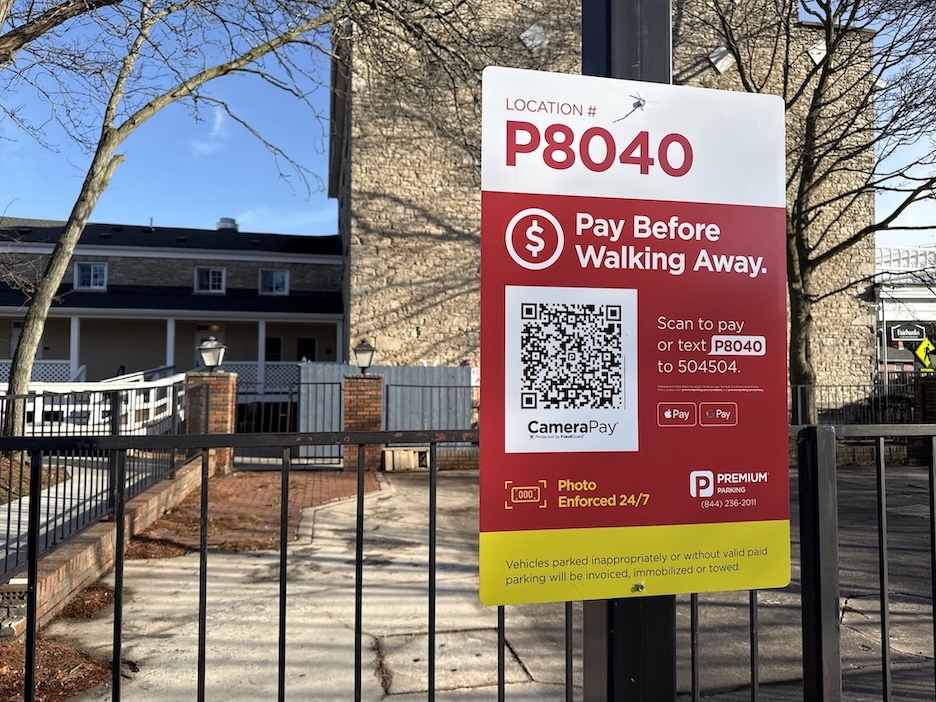
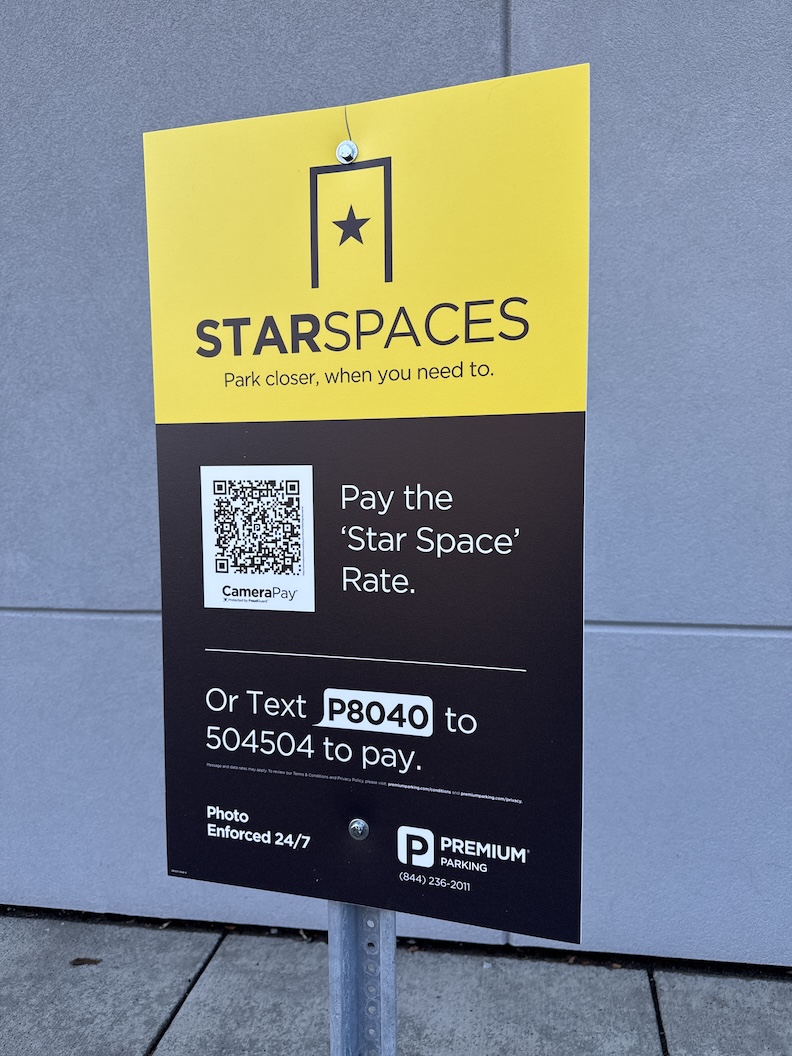
A collection of signs – some red and white, others red, yellow and white, or yellow, white and black – were placed Thursday, Jan. 8 – and then promptly removed the next day after landlord Ellicott Development was reminded signs for this site must be approved by the Village of Lewiston.
These placards noted rates starting at $1, with a QR code to pay, and a “Photo enforced 24/7” warning.
“I want to apologize that the signs went up before (approval). We had signals crossed with the landlord,” Phillips said. “We took them down right away, once we knew that we messed up the process.”
A new proposal was presented to the village about two weeks later. It called for roughly 20 signs – and the same color pattern.
In terms of design aesthetics, HPC Chairwoman Loretta Frankovitch said, “The red color and the size (each more than 2 square feet), I think, are offensive. For a historical building, they’re just out of place in our village. I’m wondering if we could tone down both the color and the size.”
“This is overkill; this is definitely overkill,” HPC member Rita Geiben said, calling such a cluster “sign pollution.”
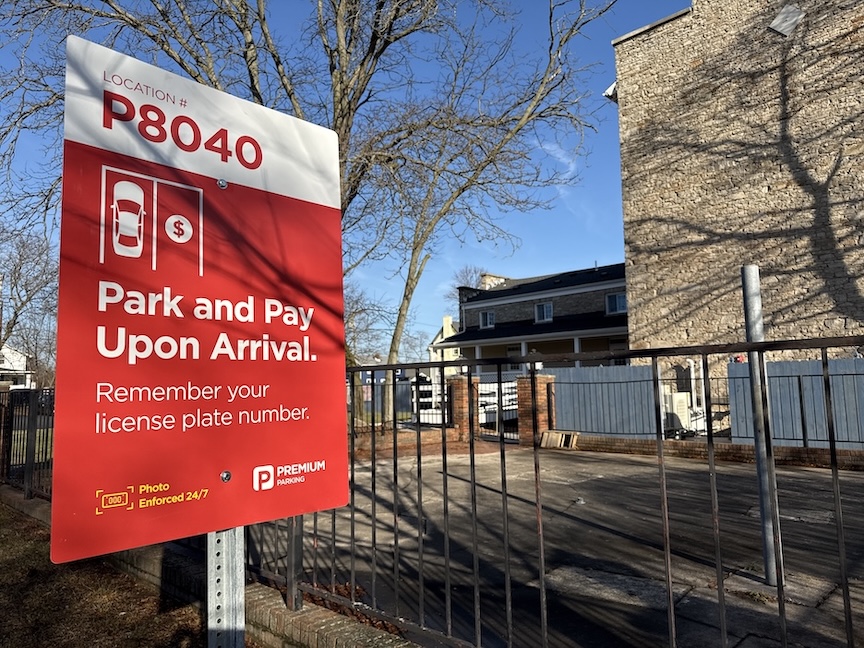
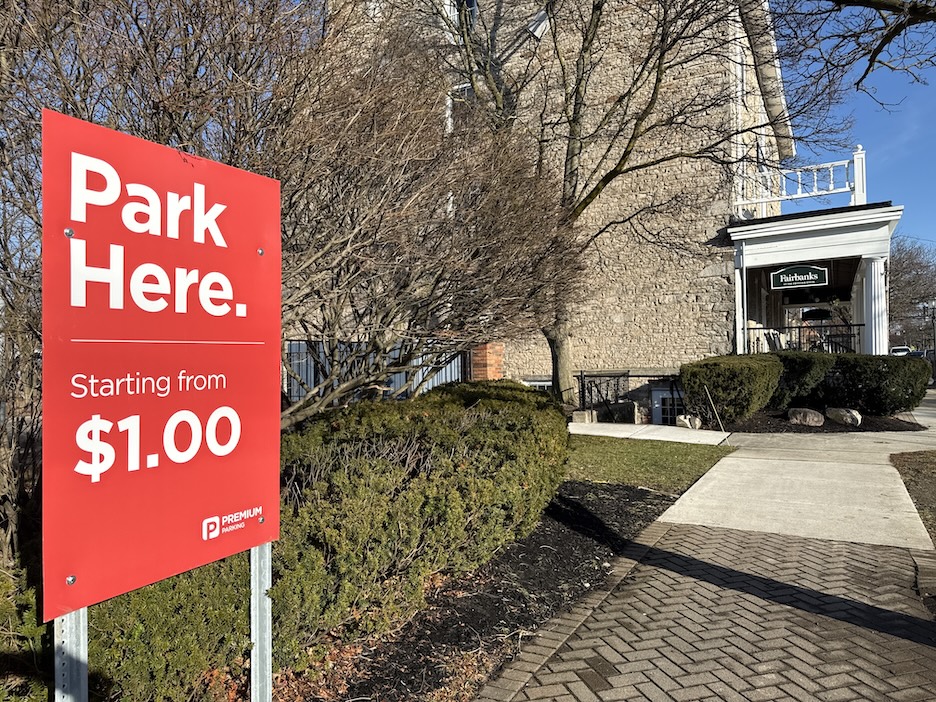
Shown are some of the signs placed in and around the Frontier House parking lot on Jan. 8.
••••••••
Phillips said, “These signs – we operate in 60-plus cities all over the U.S., and we work with Ellicott Development. Downtown, these are our standards. Marketing department puts them together in this way because they’re kind of tried and true. And for us, the whole idea is compliance.
“We want the signs to be simple – and they are; I think they’re that. Simple QR code. There are certain dynamics, but we could certainly go with muted colors. Bring them down to a smaller size. Anything that you think would be more acceptable.”
He noted, “We have very few locations where there’s just one sign. Most, there’s like one for every 10 spaces – that’s a general rule – and the biggest one is always where the focal point is, because we don’t want to fool anybody. We want people to be able to see that, when they come in, it’s expected to pay (for) parking. The last thing we want is to be in situations where we’re invoicing people.”
Mayor Anne Welch requested black and white signs to match what’s already on Center Street.
Phillips said the yellow, white and black “Starspaces” signs are probably not necessary, as they’re more often found in high-volume parking locations – like a mall, for example.
Furthermore, “If you want to start with less (signs), then fine; we’re totally happy to do that,” Phillips said.
Planning Commission Chairman Rick Haight told Phillips the sign size needs to be less than 2 square feet, as per village code.
Motions for sign approval from the HPC and Planning boards were tabled to accommodate new design and placement proposals from Premium Parking.
“We’re agreeable with all the recommendations,” Phillips said.
The new plan might include one larger A-frame-type sign at the entrance, in lieu of some smaller signs inside the parking lot.
Phillips said the sign rollout would be “soft,” both in terms of fees and enforcement. However, if Premium Parking determines people are not paying for parking as designated, “We might have to send someone around to do some enforcement,” and more signs could be requested.
“If our signs are good, people pay,” Phillips said. “People don’t typically ignore parking if they don’t have to.”
He added, “This is Lewiston. We don’t want to be slapping tickets on people. We’d rather them understand the signs and … pay us.”
The Frontier House is located at 460 Center St. Built in 1824 and opened in 1826, the building is historically designated at both the state and federal levels. Such distinction carries over to the property grounds, thus necessitating sign approval.
Lewiston’s “crown jewel,” the Frontier House was closed to the public for 20-plus years until Fairbanks Restaurant opened on the first floor in June 2025.
HPC member Peter Coppins said, “We feel for him (the landlord). If you have reservations at Fairbanks, and you don’t have a parking spot, that is totally unfair.”

























1859 Whitehaven Road, Grand Island, NY 14072
Phone: 716-773-7676
Fax: 716-773-7190