


+70
°
F
+74°
+58°
Niagara Falls
Thursday, 16
See 7-Day Forecast
Featured News - Current News - Archived News - News Categories
Hochul announces nearly $21 million for community outreach programs that work to reduce gun violence & save lives across state
Information courtesy of the Office of Gov. Kathy Hochul
Gov. Kathy Hochul announced nearly $21 million to support SNUG street outreach programs, an evidence-based violence prevention initiative that works to reduce gun violence and save lives in 14 communities across New York. These grants allow community-based organizations and hospitals to employ outreach workers, hospital responders, social workers and case managers who are credible messengers and work with individuals at highest risk of gun violence, connecting them with support and services to interrupt cycles of harm, promote healing and increase opportunity.
“I am proud to continue investing in SNUG and the community-based partners who are doing this lifesaving work every day,” Hochul said. “SNUG is helping keep neighborhoods safer, supporting families in the aftermath of violence and creating real opportunities for young people to thrive. These teams are making a meaningful difference in communities across New York, and we will continue to build on that progress.”
Set to receive funding and support from DCJS to administer SNUG programs locally:
•Erie County Medical Center: $2,864,635
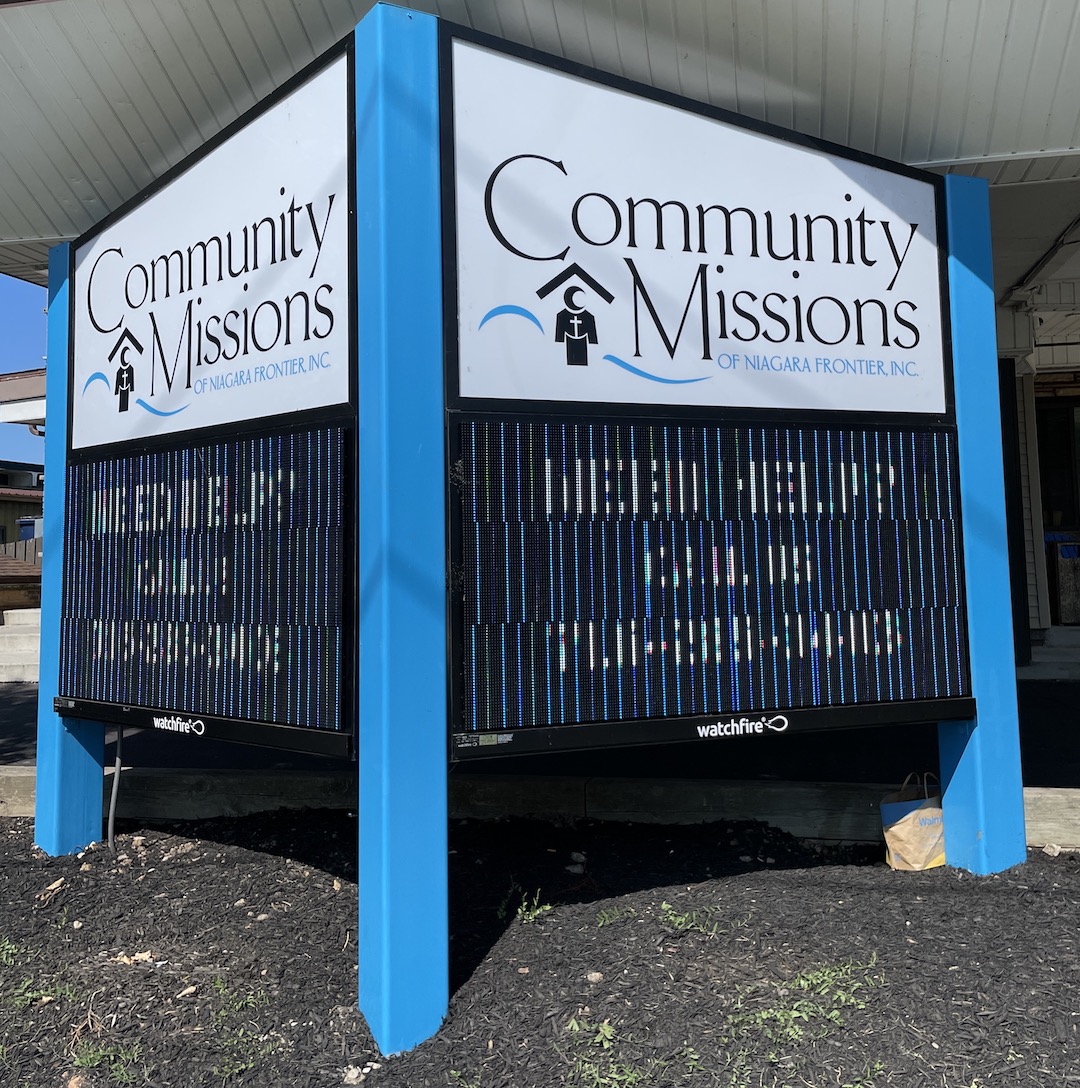
•Community Missions of Niagara Frontier: $ 694,280
The funding announcement follows Hochul’s recent report that 2025 marked record-low levels of gun violence across New York. Data released earlier this month show the 28 police departments participating in the state’s Gun Involved Violence Elimination (GIVE) initiative reported 491 shooting incidents with injury in 2025, the fewest since the state began tracking that metric in 2006. The governor’s fy27 executive budget proposal sustains unprecedented support for SNUG and other gun violence prevention initiatives in communities that account for roughly 90% of violent crimes involving firearms and 85% of violent crimes outside of New York City.
Shooting incidents with injury declined 16% last year compared to 2024. The number of individuals shot decreased 22%, from 723 in 2024 to 566 in 2025, while fatalities from gun violence fell 23%, from 116 to 89.
Administered by the state Division of Criminal Justice Services (DCJS), SNUG is a key component of Hochul’s comprehensive plan to address the causes and consequences of gun violence and other crimes, alongside the GIVE initiative, the state’s nationally recognized Crime Analysis Centers Network and Project RISE (respond, invest, sustain, empower). The SNUG street outreach program takes a public health approach to address gun violence by identifying sources of conflict, interrupting transmission and supporting individuals, families and communities affected by violence.
New York State Division of Criminal Justice Services Commissioner Rossana Rosado said, “SNUG is helping communities prevent violence before it happens and recover when it does. This work is strengthening neighborhoods, restoring trust and creating safer futures for families across New York, and we are grateful to Gov. Hochul for her continued leadership and investment in community-based violence prevention.”
Community-based organizations and hospitals will receive $20.9 million to fund staff, programs, services, equipment and technology during the 2026 calendar year. SNUG employs 176 full-time and 46 part-time personnel who work in specific neighborhoods in Albany, the Bronx, Buffalo, Hempstead, Mount Vernon, Newburgh, Niagara Falls, Poughkeepsie, Syracuse, Rochester, Troy, Utica, Wyandanch and Yonkers. DCJS tracks shooting data in these “SNUG zones” and, last year, those zones collectively reported a significant, double-digit decrease in shooting victims, individuals killed by gun violence and shooting incidents with injury when compared to 2024.
SNUG outreach workers, social workers, case managers and hospital responders serve neighborhoods disproportionately affected by gun violence and are embedded at trauma centers in Albany, Buffalo, the Bronx and Rochester to support individuals and families in the aftermath of violence and connect them to ongoing services in their communities.
SNUG staff are credible messengers who live in the communities they serve, many with lived experience of violence. They work with teens and young adults to defuse conflicts, prevent retaliation after shootings, support families and connect participants to education, employment and other services. Programs also partner with community and faith leaders and local businesses to host anti-violence events, job fairs and other neighborhood activities that promote safety and healing.
Comprehensive training, site visits and support from DCJS set SNUG apart from other community-based violence interruption programs across the state and country. New staff must complete 40 hours of training and new supervisors complete 32 hours of management training. All staff must also complete 40 hours of professional development training annually. This ongoing training and support help ensure that the program operates consistently across all SNUG sites despite being operated by different community-based organizations and hospitals.
State Sen. April N.M. Baskin said, “This investment is a clear reminder that when we lift up credible messengers and grassroots partners, we save lives. SNUG outreach workers, social workers, and hospital responders are out there every day interrupting violence, opening doors to opportunity for young people, and helping families heal. Gov. Hochul’s nearly $21 million commitment strengthens the proven strategies that have driven gun violence to record-low levels across our state. This funding ensures that communities in Buffalo and across New York state have the tools, resources and added support to keep building safer, stronger neighborhoods for everyone.”
Assembly Majority Leader Crystal Peoples-Stokes said, “The decline in gun violence across the state is the result of buy-in from government, law enforcement and, most importantly, local anti-violence groups who are out there every day putting in the work in our communities. Our neighborhoods are safer as a result of the tireless effort of our anti-violence groups.”
Erie County Executive Mark Poloncarz said, “Gun violence is declining across New York state, and programs like SNUG street outreach are a large part of the reason why, empowering community-based partners to meet the issue head on at the local level to produce better outcomes, reduce crime and keep neighborhoods safer. This funding is critical to continuing this lifesaving work and I thank Gov. Hochul for making this investment in our community.”
City of Buffalo Mayor Sean Ryan said, “This investment builds on proven work already happening in Buffalo to prevent violence and support families in the aftermath of trauma. When people know and trust the leaders working to reduce gun crime in their neighborhoods, they feel safer and more connected to the services that help break cycles of violence. I thank Gov. Hochul for continuing to invest in community-based strategies that save lives and strengthen our communities.”
City of Niagara Falls Mayor Robert Restaino said, “The success of Gov. Hochul’s efforts to rid communities of the scourge of gun violence speaks for itself through the historically low incidents of gun violence across the state. Gov. Hochul’s investment in organizations such as Community Missions of Niagara Frontier Inc., and through the hard work of the Niagara Falls Police Department, neighborhoods across the city are safer, but we know there is still much work to do in our collective work to further reduce gun violence.”
The Division of Criminal Justice Services provides critical support to all facets of the state’s criminal justice system, including, but not limited to: training law enforcement and other criminal justice professionals; overseeing a law enforcement accreditation program; ensuring Breathalyzer and speed enforcement equipment used by local law enforcement operate correctly; managing criminal justice grant funding; analyzing statewide crime and program data; providing research support; overseeing county probation departments and alternatives to incarceration programs; and coordinating youth justice policy. Follow DCJS on Facebook, Instagram and LinkedIn.





















1859 Whitehaven Road, Grand Island, NY 14072
Phone: 716-773-7676
Fax: 716-773-7190