

+70
°
F
+74°
+58°
Niagara Falls
Thursday, 16
See 7-Day Forecast
Featured News - Current News - Archived News - News Categories
By Karen Carr Keefe
Senior Contributing Reporter
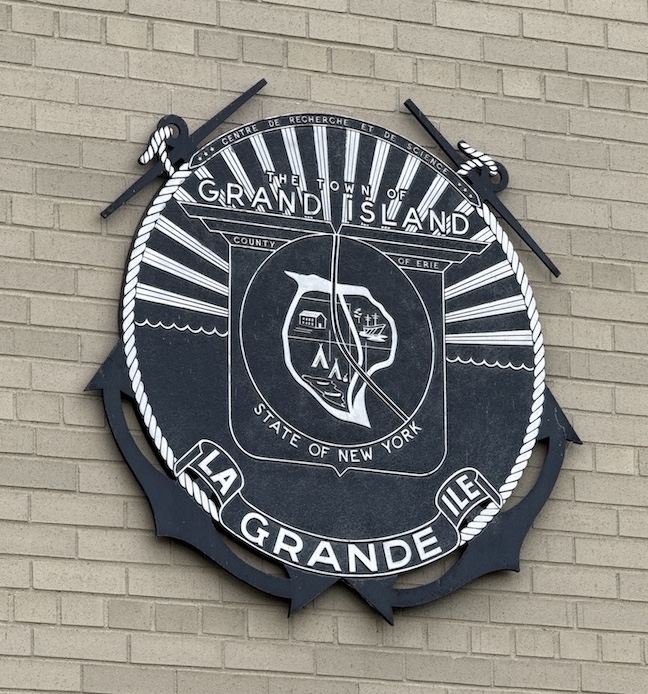
Town of Grand Island Supervisor Peter Marston wants to set the record straight on the rollout of the new, high-tech water meters.
They will be installed starting in the first quarter of 2026, he said.
Some residents have asked why installation has been delayed, yet fees to support it have already begun. In April, a flat fee of $17 per quarter was added to each water bill.
Marston explained, “The reason we paused was because there was a very strong opportunity for us (to defray costs with a grant), and we didn’t want to cut our own throats.”
If Grand Island had been in line for the grant, the town could have been disqualified if it jumped the gun and started the project before the grant was awarded, Marston said.
“We wanted to start this year on this whole water meter thing, but until that grant window closed and we did or did not win it, we couldn’t, and we were like frozen in time,” Marston said.
“We did our diligence to get any grant opportunities we could. We rode that out until we exhausted it – and now, we have no choice but to start.”
That grant went downstate, instead, to a trio of troubled towns in the Mohawk Valley that may have had a distressed watershed.
If Grand Island had been awarded the grant – possibly as much as $2 million – it could have substantially reduced taxpayers’ cost for the water meters, Marston said. He and the Town Board had decided it was worth a try.
But, grant or no grant, there was no avoiding the fact that town’s aging, failing water meters were overdue to be replaced, Marston said.
Town looked for equitable billing
A revenue stream had to be found. The flat fee was deemed the most equitable solution. The Town Board rejected two other options, raising water rates and raising taxes.
Marson said raising rates to pay for the meters would be unfair: “Now the person who has four people in their house is paying more for their water meter than somebody that lives alone, which is not really right. If you’re going to buy something, and you’re getting the same thing as your neighbor, you should pay the same amount; so, what we did makes sense – because now, it’s very equitable.”
“If we put it in taxes, now people who own vacant land would be paying for water meters, and they don’t have one,” Marston said.
“A couple of other questions that people have come up to me with: ‘Why should I? My meter’s not that old. I don’t want a new one. I don’t want to pay the difference.’ ”
The supervisor explained all meters would have to operate on the same new system; it is not the age of the meter, but compatibility with the new technology that requires all meters to be the same. An existing meter that’s new would still be obsolete with regard to the new system.
“We can’t run parallel systems,” Marston said, because the cost would be “astronomical.”
“We knew a couple years back – I saw it as a councilman that we were going to have to do this, because our water meters have a 15-year life expectancy, and we were going past that,” he said. “Everybody was afraid to take it on because they knew it wasn’t going to be pretty, but that doesn’t make the problem go away.”
“I’m still getting people saying ‘Why are you doing this? And why haven’t you done anything yet?’ ” Marston said.
Benefits of new meters
He explained the new water meters will come with a number of benefits. They will use a remote, wireless meter-reading process that allows the town to provide better customer service and reduce operational costs. That eliminates the need for a drive-by meter reading.
“The new water meters are substantially better at leak detection,” Marston said.
The new system will quickly detect a pressure drop at the source of the leak, cutting water loss and achieving far-greater efficiency.
“From what I’m told from our water people, we lose approximately 20% of the water we make, which – believe it or not – is a very good number, compared to other towns,” Marston noted.
He said the greater efficiency of the new water-meter system could hold the water rates steady for the future.
The new meters detect and report problems more quickly and frequently, allowing faster solutions. They will also stay accurate throughout their lifespan of about 15 years.
“Comparing to other communities, our water rates are very competitive,” Marston said.
He said other municipalities that claim they are not charging to install a new meter system are actually not upfront in showing that they are charging more, just in other ways, such as raising water rates or raising taxes.
Next step is going out to bid
The town has selected the type of meters needed and is putting together a request for proposals (RFP) that will be adopted at the next Town Board meeting. Then, from the bids, a vendor will be chosen. The Wendel engineering firm has helped the town design its water system to fit in with the new meters. The town’s own engineering department will recommend which company should be awarded the bid for installation of the new water meters. Then, the Town Board will authorize the selection and begin the process.
“Hopefully, by the beginning of January, we will be on the way to getting this done,” Marston said.
He added the revenue already collected by the added $17 flat fee will serve as a down payment on the costs of the meter project, going forward.
“Depending on what the actual quote comes back at and what the interest rate is, we’re going to see what it looks like,” Marston said.
“There’s going to be some points in the whole bonding process that some years you pay less, some years you pay more.”
He said that, as a board, council members will need to decide whether to vary the fee to customers, or amortize the whole cost over the 15-year lifespan of the meters and charge the same rate all along.
“We are more than in line – we are extremely competitive as far as water costs for our residents,” Marston said.
The supervisor acknowledged the water plant will have to be upgraded at some point to meet the growing demand, and “We do have a couple grants out for that.”
Town grant writer Elaine O’Neill said, “Internally, we’re trying to develop an approach to grant writing that we didn’t have before – that it would be more dynamic, that it would be more proactive instead of reactive.”
She said it’s a goal to have more communication between all department heads and advisory boards and get a more efficient approach to getting grants to fund town projects.
Marston said O’Neill has been very active in learning what other communities are doing in their grant research and methods.
“We’re trying to figure out the recipe,” O’Neill said.























1859 Whitehaven Road, Grand Island, NY 14072
Phone: 716-773-7676
Fax: 716-773-7190