


+70
°
F
+74°
+58°
Niagara Falls
Thursday, 16
See 7-Day Forecast
Featured News - Current News - Archived News - News Categories
By Karen Carr Keefe
Senior Contributing Writer
On Nov. 4, voters get the final say on whether the Town of Grand Island will buy the current Niagara Hyundai site on Alvin Road for a community recreation center and other public uses.
The town would finance the purchase through bonds, not to exceed $10 million, over a term of 15 years.
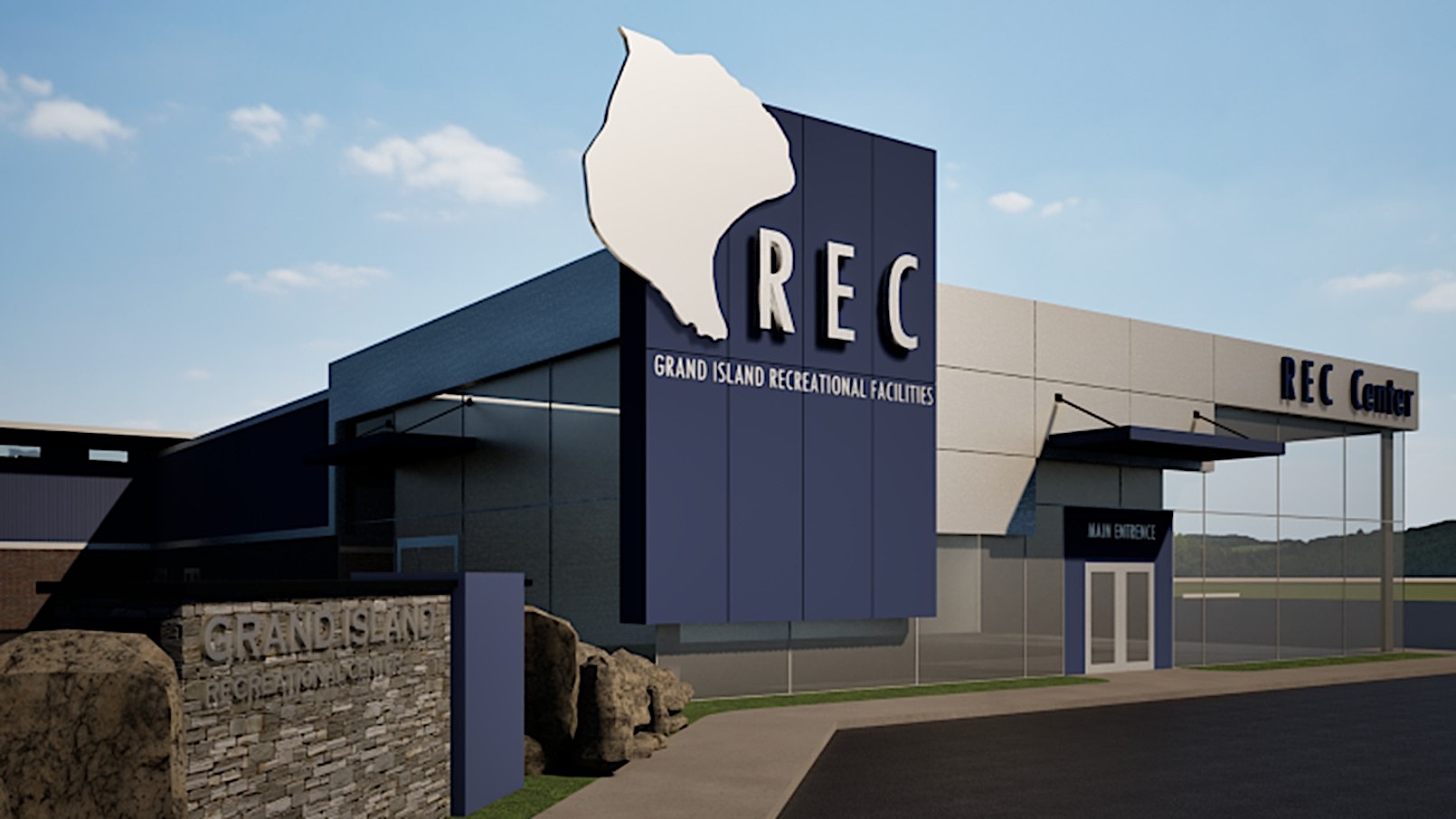
The site includes an office complex and 75 acres for subsequent development.
Grand Island Supervisor Peter Marston said he is not taking a stand for or against the referendum.
“I’m trying to be as neutral as I can. I don’t tell people how to vote. I want people to do what they want to do. But I want them to make sure they’ve got all the facts.”
“I will say that, in my decade-plus of involvement in the town, that this has been the No. 1 thing that people have always asked for – and said, ‘We need a community center. Other towns have it. We don’t – why don’t we?’ Well it’s money,” Marston said.
The referendum, by the numbers
“Our taxes are relatively affordable. We do have some higher property values here. But as far as our costs per $1,000 (of assessed value), we really do our best to stay fiscally responsible. The cost of something like this to build new is just phenomenal. It would have been a massive hit to the community,” Marston said.
The total project budget is estimated at $9.8 million by the town’s consultant, LaBella Associates. That figure includes property acquisition; construction (with contingencies); furniture, fixtures and equipment; and the soft costs of a consultant’s design and testing.
The consultant said, “Not only is the building (on the 1910 Alvin Road site) an early 2000s build, it includes 75 acres with sufficient frontage for additional buildings and amenities on site in the future.”
Marston said, “I don’t see a way that you get this type of footprint for under $20 (million) because we are required to pay the prevailing wage on what we build – and everything else – so, building, acquired property, clearing property, adding infrastructure is just so expensive for us.
“So, I kind of took all that over all the years and said, ‘The only way we’re going to really do this ever – responsibly – is to find an existing building that works.”
The impact on property taxes
An information brochure that LaBella prepared on the referendum facts said, “The implication of this project would require a bond resulting in an increase in property taxes of about 30 cents per $1,000 of assessed value.” It said the average $400,000 house value would see a property tax increase of $120 per year to afford this opportunity for the town.
The building on the Alvin Road site – the former Maguire, now Niagara Hyundai car dealership – is owned by the Cecconi Chrysler Complex and will eventually move to Niagara Falls, possibly as soon as late-summer 2026.
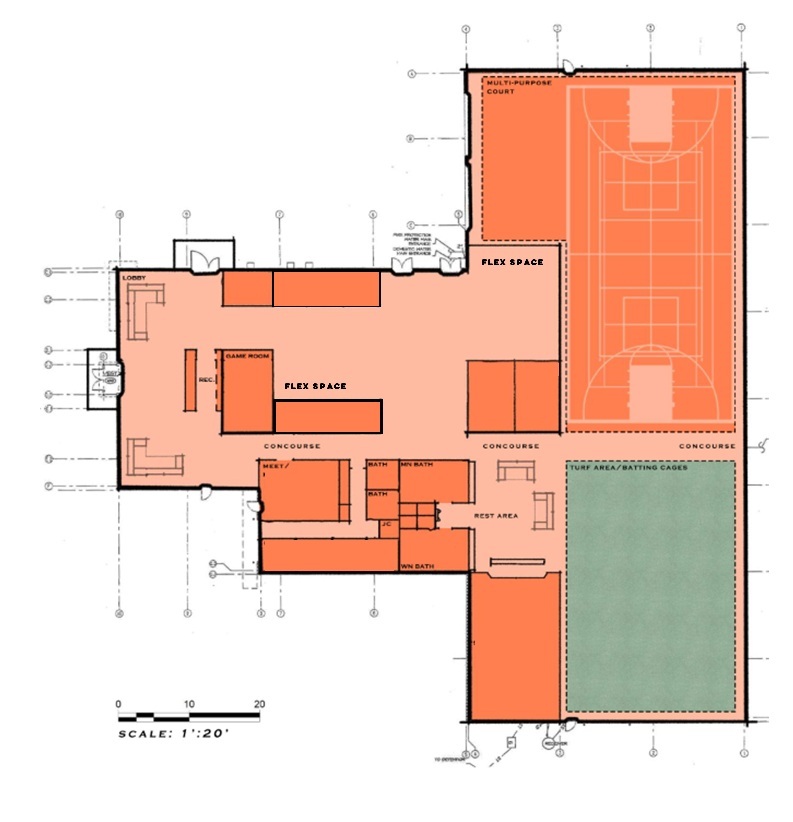
The floor plan for the proposed Grand Island community center. Voters will decide on a Nov. 4 bond referendum for purchase of the Niagara Hyundai property on Alvin Road. (Image courtesy of LaBella Associates)
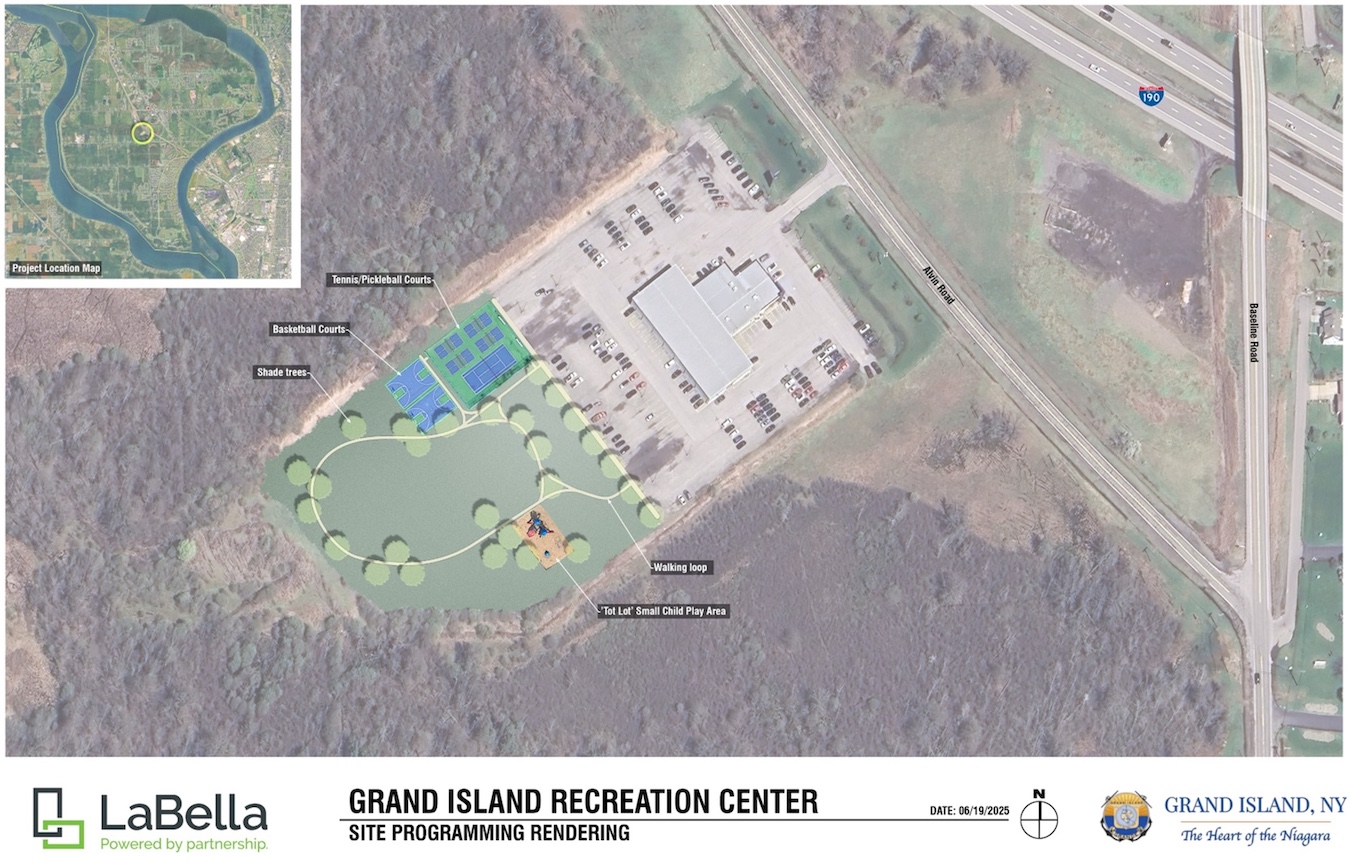
The site plan for the proposed community center. (Image courtesy of LaBella Associates)
••••••••
Pros and cons
Marston said the cost/benefit factor is an important consideration: “That’s a lot of money to a lot of people. I’ll be very frank and say I have a lot of friends and colleagues that support it. I have a lot of friends and colleagues that really don’t want to spend the money on it. They don’t feel they need it. It’s very, very even. And that’s where it got tricky for the Town Board, because there are very strong arguments on both sides. But if you want to have a bit of a vision and you want your community to get to this point, you have to spend it."
‘The project found us’
Initially, Marston and Town Highway Superintendent Dick Crawford toured the Alvin Road building and property to evaluate its suitability as a town highway garage. They also had the idea that the existing highway property on Whitehaven Road, with its large bays for equipment, could become a recreation center. After their tour, and further pricing research, they both concluded that, comparing the two sites, the existing Hyundai sales office had the greater potential for conversion to a community recreation center.
“This kind of fell out of the sky,” Marston said. “We weren’t looking for it. It kind of found us. But I think everybody we’ve talked to agreed that we can get more for our money than we ever could any other way. That was kind of the driver behind it.”
Why is it on the ballot?
Marston and the rest of the board were firm in the belief that the people should decide, even though the purchase decision could have been made by the board.
“It’s a lot of money – and I know that. It’s an impact to people – and I know that. So, the board was unilateral in putting it to a referendum and let the people make the decision,” Marston said. “And if the people don’t want it, then we’re not going to do it. If the people want it – as a majority – then our job is to give them the very best thing we can for the least amount of money.”
Marston said, “As a Town Board, we could have voted to purchase it. I don’t know that the board would have passed it that way, but it could have been done. The whole board unanimously felt that it was most important to put it to a referendum and let the community make their own decision.”
What about infrastructure needs?
Some have asked whether spending on infrastructure needs should supersede acquiring land for a community recreation center. Marston’s answer to that is: “Infrastructure obviously is critical. And we have always been extremely diligent on investing in our infrastructure. We do water lines regularly. We do sewer lines. We do upgrades here and there. We are constantly putting grant applications in for sewer upgrades. So, to me, that’s a given. That’s ongoing. That never ends. This isn’t in lieu of that. That is business as usual.
“Everything we’ve put on the referendum covers this. We are not digging into our pocket.”
He said the calculated expenses include the cost of running and maintaining such a facility and the additional personnel it would take to do that.
LaBella said the community center, as a cultural and recreational project, “would be highly competitive for state grant funding due to its local and regional impact.”
Potential uses of the property
And as to the whole parcel, Marston said, “There’s enough property there to do 300% of what we want to do in the future. This really would set the town up to build more of a campus in the future and reinvent, if it felt necessary.”
“The town owns no indoor sports recreation space,” Marston said.
The consultant’s graphic that shows potential layout of the site includes areas for pickleball, tennis and basketball courts, a batting cage, a walking/running loop, a “tot lot” child play area, and shade trees.
The indoor area of about 25,000 square feet could provide club meeting space and meet athletic and social needs for a multigenerational population, LaBella Associates suggested. Marston said the open space and high ceilings in the existing building could provide flex space for different indoor sports such as basketball, yoga and tai chi.
The availability of the Alvin Road site happened to come along at the same time that a consultant’s survey was underway. Nearly 1,000 survey respondents identified a need and demand for improved indoor recreation facilities for all ages, due to a growing population. The survey was part of the town’s ongoing process of developing a Parks, Recreation and Senior Services Master Plan.
Marston said the size of the parcel could accommodate, eventually, a new Golden Age Center, a new Town Hall, a salt garage or a storage facility for seasonal equipment, should those needs be identified.
















1859 Whitehaven Road, Grand Island, NY 14072
Phone: 716-773-7676
Fax: 716-773-7190