


+70
°
F
+74°
+58°
Niagara Falls
Thursday, 16
See 7-Day Forecast
Featured News - Current News - Archived News - News Categories
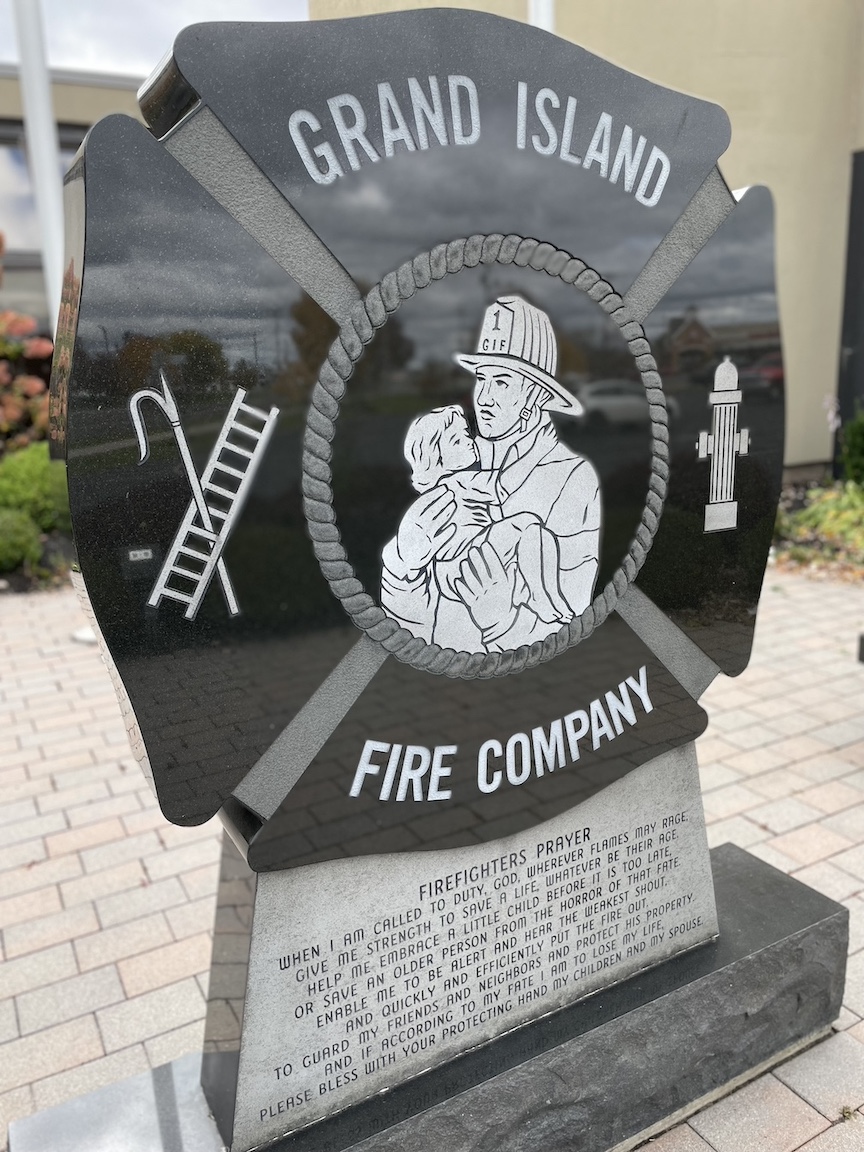
Discussion includes heated words
By Karen Carr Keefe
Senior Contributing Writer
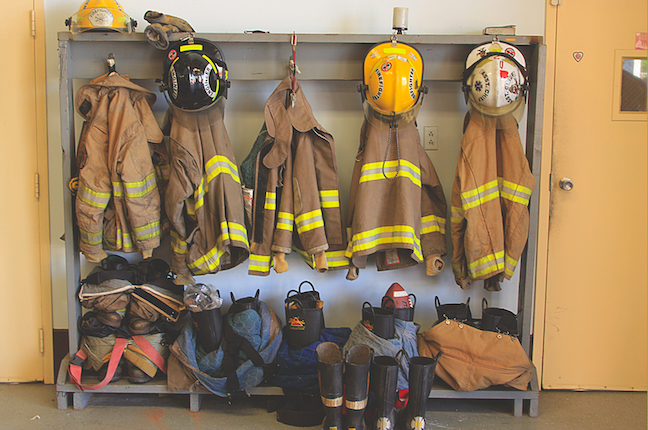
The Town Board approved a three-year contract to fund the Grand Island Fire Co. after a public hearing last week, but the process ignited some controversy among Town Board members.
The board wanted to reduce the contract amount from what the fire company was seeking. But Dan Kilmer, who calls himself a fiscal conservative, was pushing for deeper cuts than his colleagues were. The difference of opinion brought criticism of Kilmer’s stance from a fellow board member.
In the end, Kilmer joined the board in unanimous approval of the pact.
Terms of contract
After bargaining, the two sides settled on a new contract that:
•Reduces the increase over the previous pact, from the 28% firefighters asked for to cover expenses in 2026, down to an 8% increase for the first year of the agreement; with a total fire company budget of $1,800,360 for 2026.
•Includes an 5% increase in the second year, for a total budget of $1,890,378.
•And includes a 4% increase in the third year, for a total fire company budget of $1,947,089.
The total allocation in the first two years of the contract is $3,690,738; the total allocation for the entire three years of the contract is $5,637,827.
The fire company budget for 2025 stood at $1,667,000, Supervisor Peter Marston said. That figure was the end-point of what previously was a three-year contract with a two-year contingency, he added.
Marston said he favored a three-year contract: “What we adopted wasn’t exactly what I wanted, but it’s pretty close.
“I think we all had a little different way of looking at it. I was more apt to go with a higher percentage this year and a lower percentage in years two and three. But it worked out to within pennies of difference, as far as the three-year impact.”
“We got our point across that we need consistency,” Marston said Monday. “They did get a little bit of an incremental raise, which was good. They needed it because, for what I can see, they were starting to use up reserves, which means they were spending more than they were getting. So, this should, basically, stop the bleeding, because they should have some reserves.”
Marston credited Council member Tom Digati for facilitating the agreement between the town and the fire company: “He put all the pieces together. He did a good job.”
Praise and criticism
At the Dec. 29 public hearing on the contract, Jeremy Pullano, chairman of the fire company board of directors, praised the negotiation process and results.
“This contract represents a fair and responsible agreement that helps ensure our community continues to receive reliable, professional fire protection,” he said. “Fire services, EMS services, dispatch services are not just another line item in the budget. They are essential to the safety of our residents, our homes and our businesses.”
He said the contract “shows cooperation and good-faith negotiation.”
“I appreciate the work that went into reaching this agreement,” Pullano said.
“Personally, I'd like to thank those board members who looked past the rhetoric, past the misinformation being shared by some, sought out the truth through proper channels, and continued to negotiate in good faith.”
After the public hearing was closed, a motion was made by Digati to approve the contract, seconded by Council member Christian Bahleda.
Leading off the discussion before the vote to approve, Kilmer said, “I don't like the way that I get painted by the fire company. I support every one of you out there. I did it for 39 years. I support everyone that wears a uniform. Just because I'm conservative and I'm working to make sure the taxpayers get the biggest bang for the buck doesn't mean I don't support you.”
He added, “There's nothing I wouldn't do to support you guys. I simply wanted to make sure that what you were asking for is what you needed.”
Kilmer said he thought the 8% increase was still a little too high, when previous annual increases in the fire company budget were in the range of 3% to 4%.
“I am in your corner. It's just I'm also in (the corner) of 21,000 people that live on Grand Island, to keep Grand Island affordable,” Kilmer said. “Public safety is No. 1, but you are a piece of the pie that we have to look at. And I have to be conservative when we think about how we're spending taxpayers’ money.”
Council member Jose Garcia said he appreciated the service of every one of the firefighters.
“Thank you for what you do, and I'm glad we were able to come to an agreement. Never was there ever a question of funding operations. There was some back-and-forth on what capital planning meant and how it was presented, and I think we worked through that fairly and I appreciate the efforts.”
At the close of the discussion, heated words were exchanged between Bahleda and Kilmer, with Bahleda saying, “Dan, they're volunteers. Please don't talk (in a way that is) disrespectfully angry at them.”
Kilmer replied, “Don't ever say I disrespect anyone in uniform.” He added, “I was telling them that they've been misunderstanding me. I support them.”
Controversy over contract negotiations
Kilmer, in a guest view published in this issue, alleged there were “unofficial, unsanctioned backroom negotiations” about the fire company contract between some, but not all of the members of the five-member Town Board.
Marston said he met with Digati once and separately with Bahleda once to talk about the fire contract, but denies that this constitutes any illegality. He said it would be improper if it were three Town Board members, but that it’s OK and no violation of state law for two board members to meet separately from the full board.
“If you have more than two board members, it’s considered a quorum, and if you’re talking town business, that’s not appropriate. We followed the rules,” Marston said.
“So, Dan had every opportunity to work with the fire department, as well, and sit down with them and spitball ideas and talk about things. He was incapable of it because he was simply a ‘no’. ”
History of negotiations
Back in 2024, the fire company had also discussed establishing its own fire district that would transfer the responsibility of fire protection from the town to the fire company. The budget would be developed by the fire company, which could levy taxes to support it. The fire company’s legal counsel had expressed the opinion that a fire district could reduce the cost of needed firefighting equipment.
Currently, the town operates the fire company under a fire protection district. That type of district empowers the town to collect taxes for the fire company and it entails potential liability for the town when the fire company is on duty.
Marston described the path negotiations took.
“It was kind of a wild ride because they had been talking about the whole fire district thing and being their own tax-collecting entity,” he said. “A while back, things got a little crazy where they wanted a lot of money to go off on this new type” of organization.
They were going to have their own board, with elections, Marston said.
“It would be a big move. So, right now … I will call them a quasi-vendor for the Town of Grand Island,” paying the fire company as the town would pay for garbage collection and the like.
Marston explained it as a unique, hybrid relationship, where the fire company is sponsored by the town, their worker’s compensation is through the town, and they collaborate in many ways to save money for the taxpayers.
The Town Board had ultimately voted to refer the fire district proposal back to the board for further study to resolve questions that were raised in a public hearing in the fall of 2024.
“We decided to not push that whole district switch-over,” Marston said. “Financially, it didn’t make a lot of sense, as long as they were appropriately funded and we can keep everything going with the services we currently have.”
“I don’t know anybody that isn’t really happy with the Grand Island fire department and their services to the town,” he said, calling them “second to none,” in dedication to their hometown.
























1859 Whitehaven Road, Grand Island, NY 14072
Phone: 716-773-7676
Fax: 716-773-7190