

+70
°
F
+74°
+58°
Niagara Falls
Thursday, 16
See 7-Day Forecast
Featured News - Current News - Archived News - News Categories
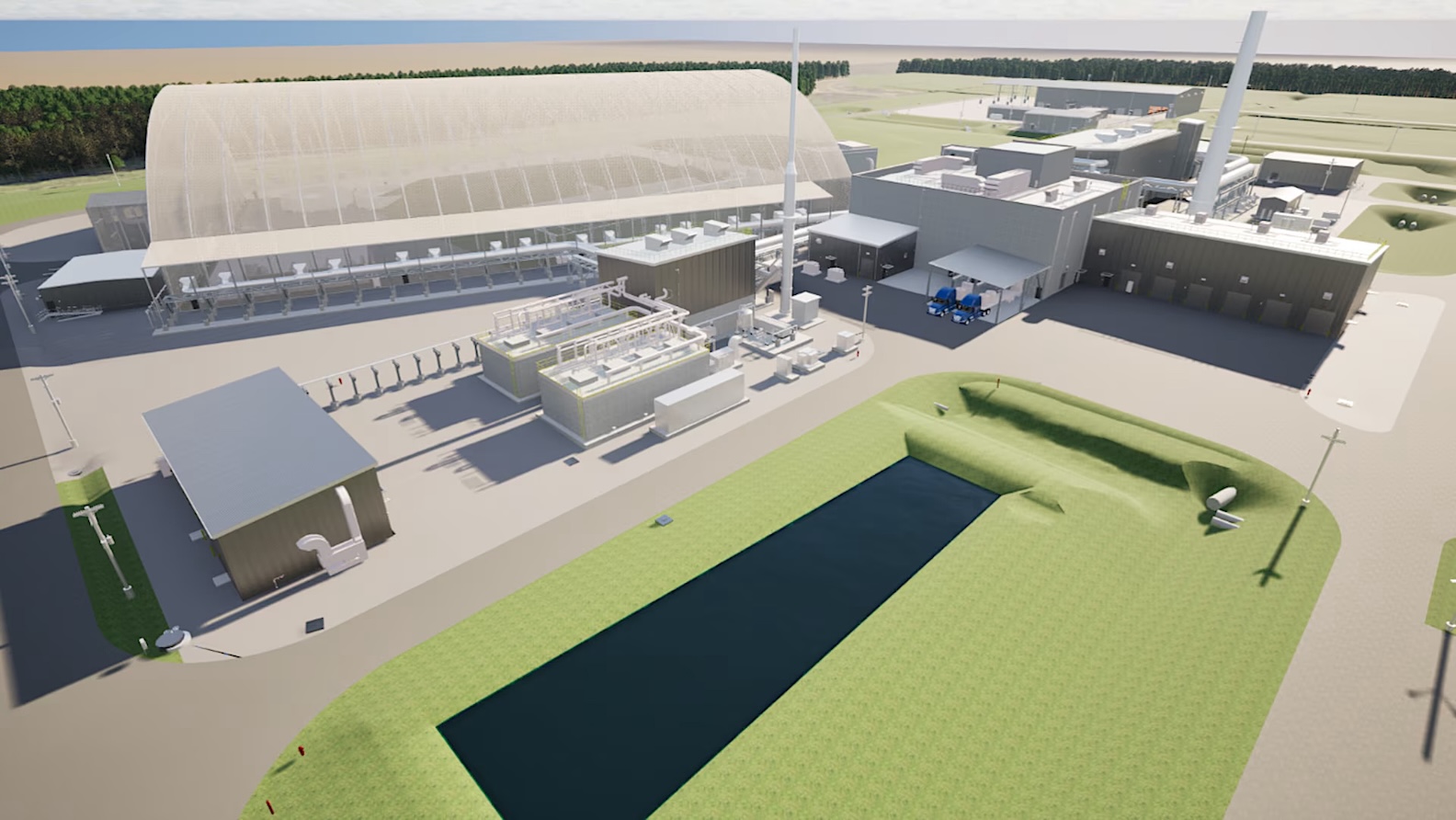
Balance of plant complete, IWCS radioactive cell next; Army Corps envisions mid-2030s cleanup of site
By Terry Duffy
Editor-in-Chief
While state DEC and EPA studies and remediation work of possible radioactive hotspots continue in many WNY communities, cleanup work on a massive radioactive storage cell is well underway at the former Lake Ontario Ordinance Works in Niagara County.
The U.S. Army Corps of Engineers, Buffalo District, recently issued an update on a multi-year remediation project now underway at the 191-acre Niagara Falls Storage Site on Pletcher Road in Lewiston. According to the Army Corps, the work centered on removal/cleanups of radiological contaminants within balance of plant areas at NFSS. The work seen is a precursor toward a future complete removal of high-level radioactive waste inside NFSS, namely the 10-acre interim waste containment structure.
“USACE has successfully completed a majority of the Phase I balance of plant (BOP) remediation at the NFSS,” the Army Corps stated. “As of August, 101 of 102 targeted areas have been successfully excavated, and the waste has been safely shipped to properly permitted facilities. Over 1,600 truckloads of soil totaling over 26,000 cubic yards have been excavated and shipped offsite.
“Cumulatively, these excavation areas have included technologically enhanced naturally occurring radioactive material (TENORM), polycyclic aromatic hydrocarbons (PAHs), and chlorinated volatile organic compound (CVOC) contamination. Restoration of all 101 completed excavation areas was completed in August of 2026.”
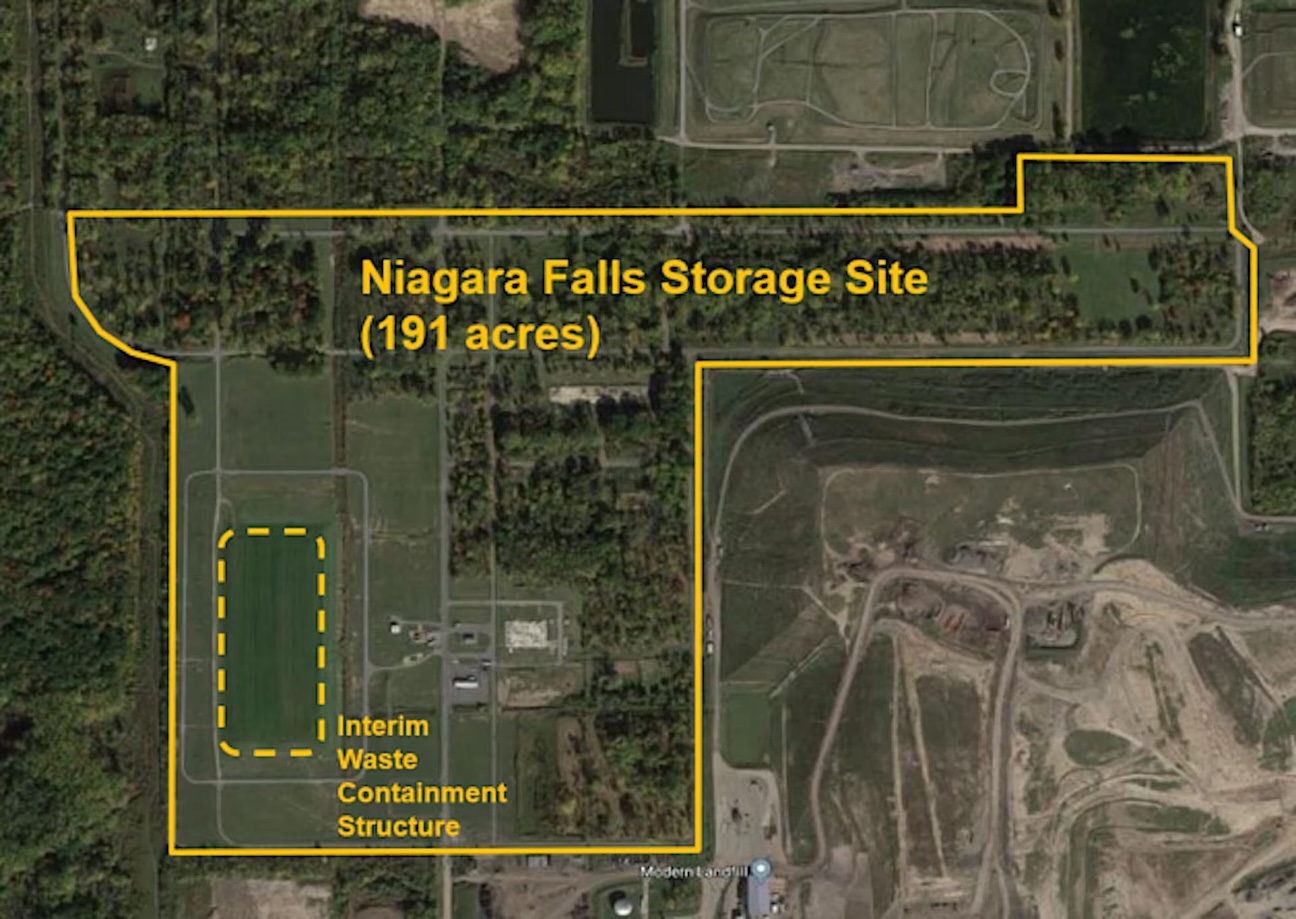
An overview of the Niagara Falls Storage Site, with the interim waste containment structure shown at left. (Army Corps image)
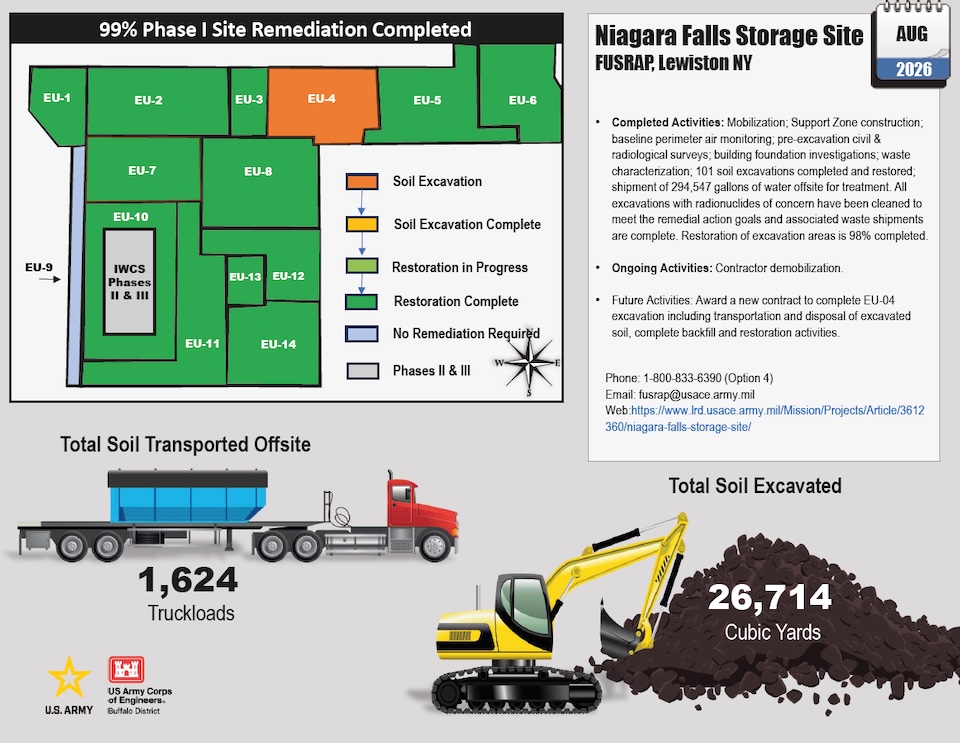
Remedial progress infographic illustrating the work completed on the Niagara Falls Storage Site, Phase I, balance of plant remediation, as of July 2026. (Photo: USACE)
••••••••
The Army Corps added, “USACE intends to safely pause and transition the final remaining excavation, exposure unit – 04 (EU-04), to a future contract due to a localized discovery of additional CVOCs. Removal and disposal of this material would exceed the capacity of the current contract, as well as currently available funding.
“EU-04, contains debris and CVOCs. Once down into the bottom of this large excavation, active work revealed that the CVOC footprint is deeper and wider than the initial historical models predicted.
“USACE has delineated the estimated boundaries of this remaining contamination through trenching and detailed field sampling. To safely manage this area until a new contract and funding are established, USACE has collected civil survey coordinates of the excavation footprint, installed a physical demarcation barrier, and the area has been backfilled with clean soil.
“There is no immediate risk to public health or the environment from this subsurface material. USACE will continue its rigorous, ongoing environmental surveillance program at NFSS to ensure public safety. Monitoring includes air, groundwater, surface water, and sediments.”
WATCH: https://www.dvidshub.net/video/1022238/niagara-falls-storage-site-groundwater-monitoring
Next steps
So, what lies ahead at NFSS? According to earlier record of decision documents, plenty. As reported here on March 30, 2019, “U.S. Army Corps headquarters officials in Washington, D.C., following years of delays, officially signed off on its Alternative 4 record of decision for remediation of the interim waste containment structure operating plant at the Niagara Falls Storage Site on Pletcher Road. A 10-acre cell constructed in the mid-1980s, the IWCS houses high-level K-65 radioactive wastes dating from World War II-era uranium processing, plus lower-level R-10, L-30, L-50 and F-32 residues. All were associated with the U.S. government’s Manhattan Project leading to the development of the atomic bombs dropped over Japan that ended the war.”
A $490 million remediation project (per 2019 estimates), “Alternative 4 was announced with much fanfare by the Army Corps in December 2015 following years of detailed Corps and community reviews” (report from Dec. 12, 2015).
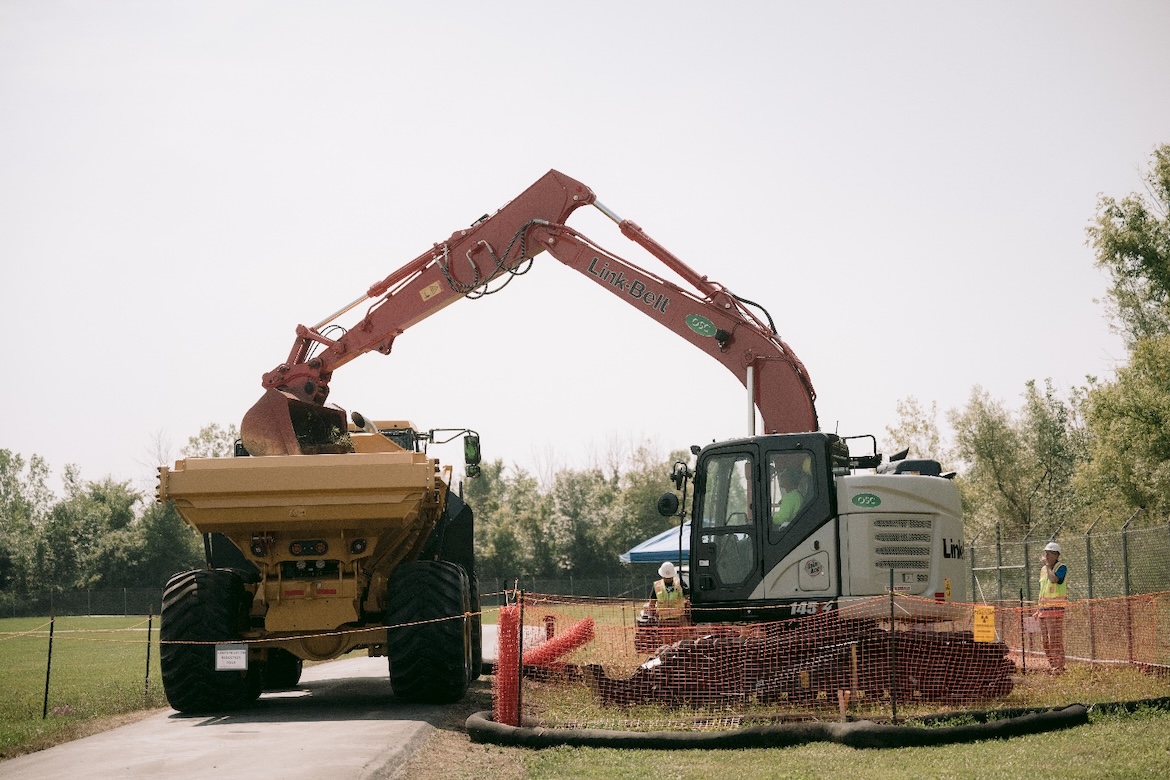
July 2024: The first excavation area during the Niagara Falls Storage Site, Phase I balance of plant (BOP) remediation effort. (Photo: USACE)
••••••••
Complete off-site disposal
“Intended to fully remediate the IWCS, it calls for, ‘excavation, partial treatment, and off-site disposal of the entire contents of the IWCS,’ ” the Army Corps stated.
Located just miles from Lewiston-Porter High School, the IWCS is a government-engineered and -designed facility built by the U.S. Department of Energy on the west side of the NFSS in the mid-1980s. Constructed partially in-ground, its cells utilized the basement area of a former massive water treatment facility at LOOW from the World War I era to consolidate high-level nuclear wastes removed from excavated buildings and silos at NFSS. The balance of the debris inside the structure includes lower-level radioactive wastes brought to the Lewiston facility over past decades for storage, plus assorted construction debris. The site includes a clay cap and soils, and is topped with a grass mound.
Today, the IWCS remains secure as an Army Corps-maintained facility that will be 40 years old in 2027.
“The IWCS continues to perform as designed and remains protective of human health and the environment, as confirmed by over 30 years of extensive data analysis,” the Army Corps said.
Nonetheless, it is working toward complete removal of IWCS contents as outlined in the 2019 record of decision: “After evaluating the alternatives in the feasibility study pursuant to the criteria described in the national oil and hazardous substances pollution contingency plan (NCP), the Corps of Engineers considers Alternative 4 to provide the best overall protection of human health and the environment.”
Following its 2019 record of decision for Alternative 4, USACE awarded a $54 million architect-engineer contract covering 2021-26 to develop detailed removal plans and designs for the future remediation of the IWCS. The design work is expected to include Phase II and Phase III plans in the radioactive waste removal/remediation process at IWCS and be ready for Army Corps review in 2027.
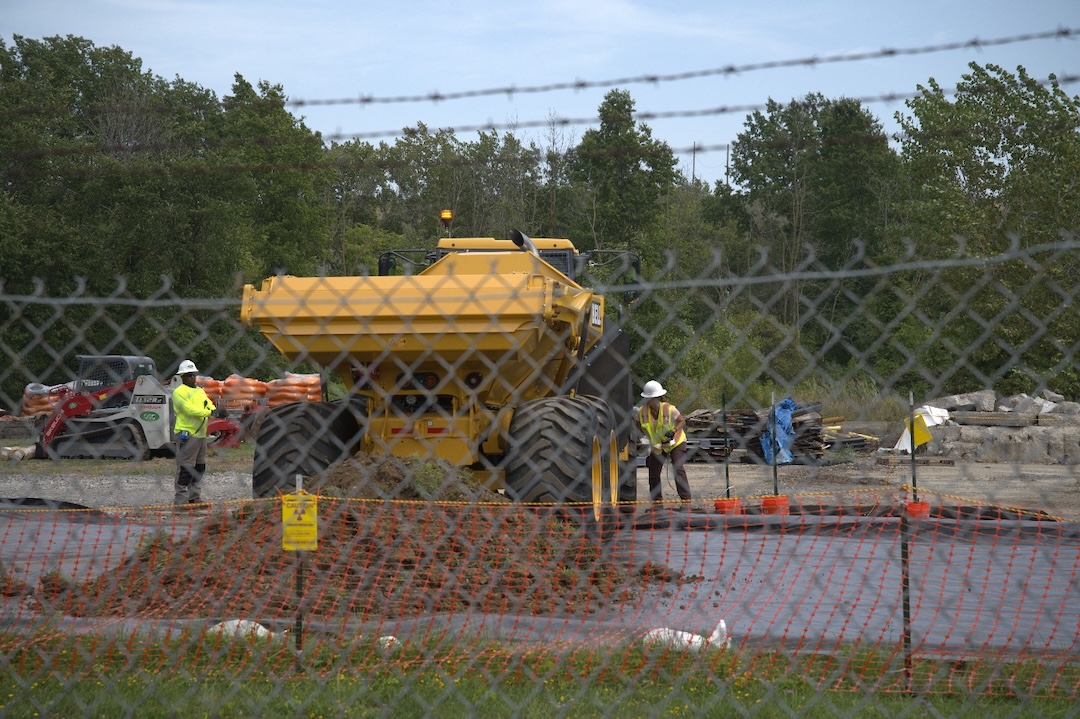
July 2024: Relocating excavated soil to a staging area. Soil samples must be sent to a lab to ensure they meet the acceptance criteria of the waste facility prior to shipping. (Photo: USACE)
••••••••
High-tech waste removal
While actual details have yet to be released, anticipated remediation work at the site would likely include a complete covering of the IWCS cell to prevent any releases, and the utilization of robotics to remove contaminants. All radioactive contents of the cell would be removed, encapsulated in glass containers, and then prepared for transport via truck and rail to an out-of-state, long-term nuclear storage facility.
Once the phases II and III designs are complete, the awarding of government contracts to pursue the remediation involved would likely come next. However, the project’s ultimate completion remains dependent on future congressional funding appropriations, which at this point are uncertain.
Army Corps officials have estimated the ultimate cost for the IWCS remediation to be in the $750 million to $1 billion range, with an estimated completion to be in the mid-2030s.
For more information in the Niagara Falls Storage Site and the IWCS, visit https://www.lrd.usace.army.mil/Missions/Projects/Display/Article/3612360/niagara-falls-storage-site/.
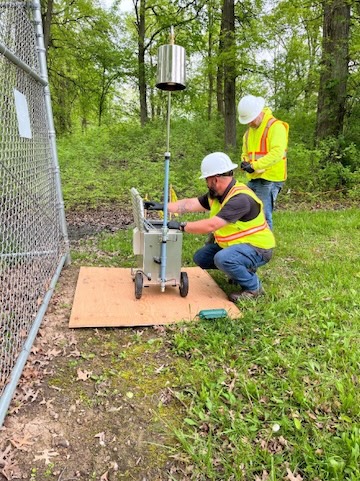
May 2025: Team members calibrating a perimeter air monitor at the Niagara Falls Storage Site. Stationary air monitors that can detect dust and evaluate radiological particulates operate 24/7 along the site boundaries during remedial work. (Photo: USACE)
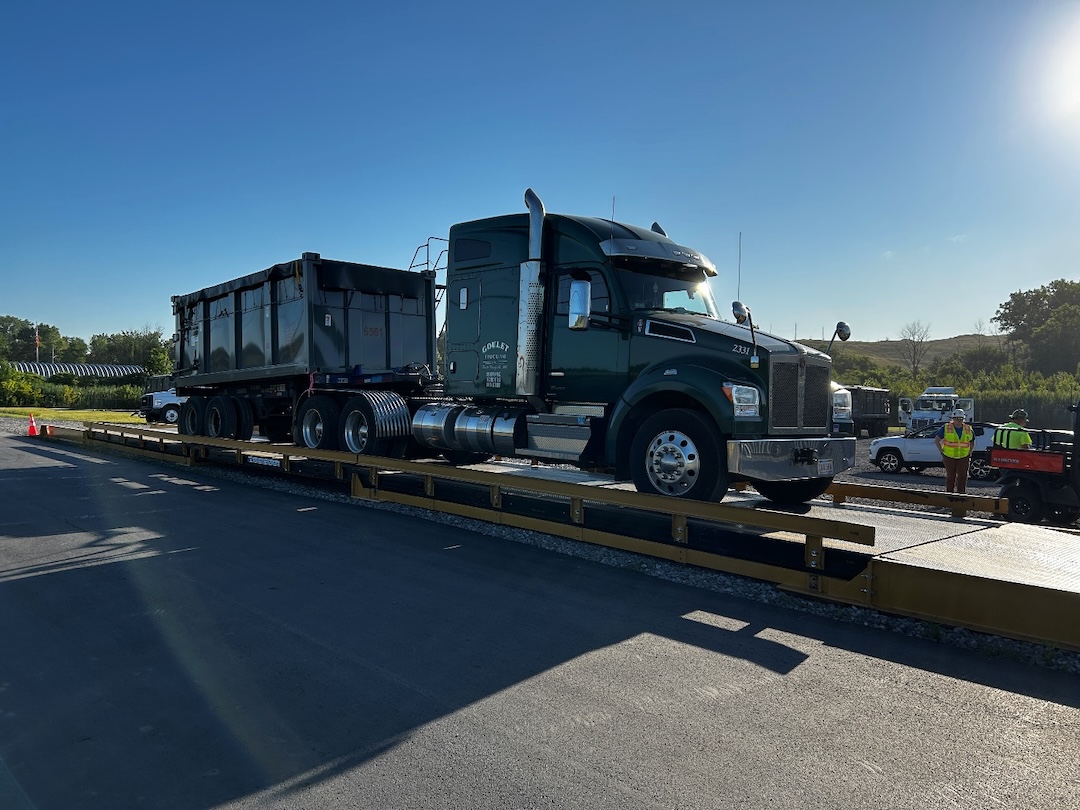
July 2025: A truck containing excavated soil from the Niagara Falls Storage Site begin weighed and inspected prior to shipping to a properly permitted waste facility. As of August 2026, over 1,600 truckloads of soil totaling over 26,000 cubic yards have been safely excavated and shipped offsite. (Photo: Joseph Paulin)





















1859 Whitehaven Road, Grand Island, NY 14072
Phone: 716-773-7676
Fax: 716-773-7190