

+70
°
F
+74°
+58°
Niagara Falls
Thursday, 16
See 7-Day Forecast
Featured News - Current News - Archived News - News Categories
By Senior Contributing Writer Karen Carr Keefe
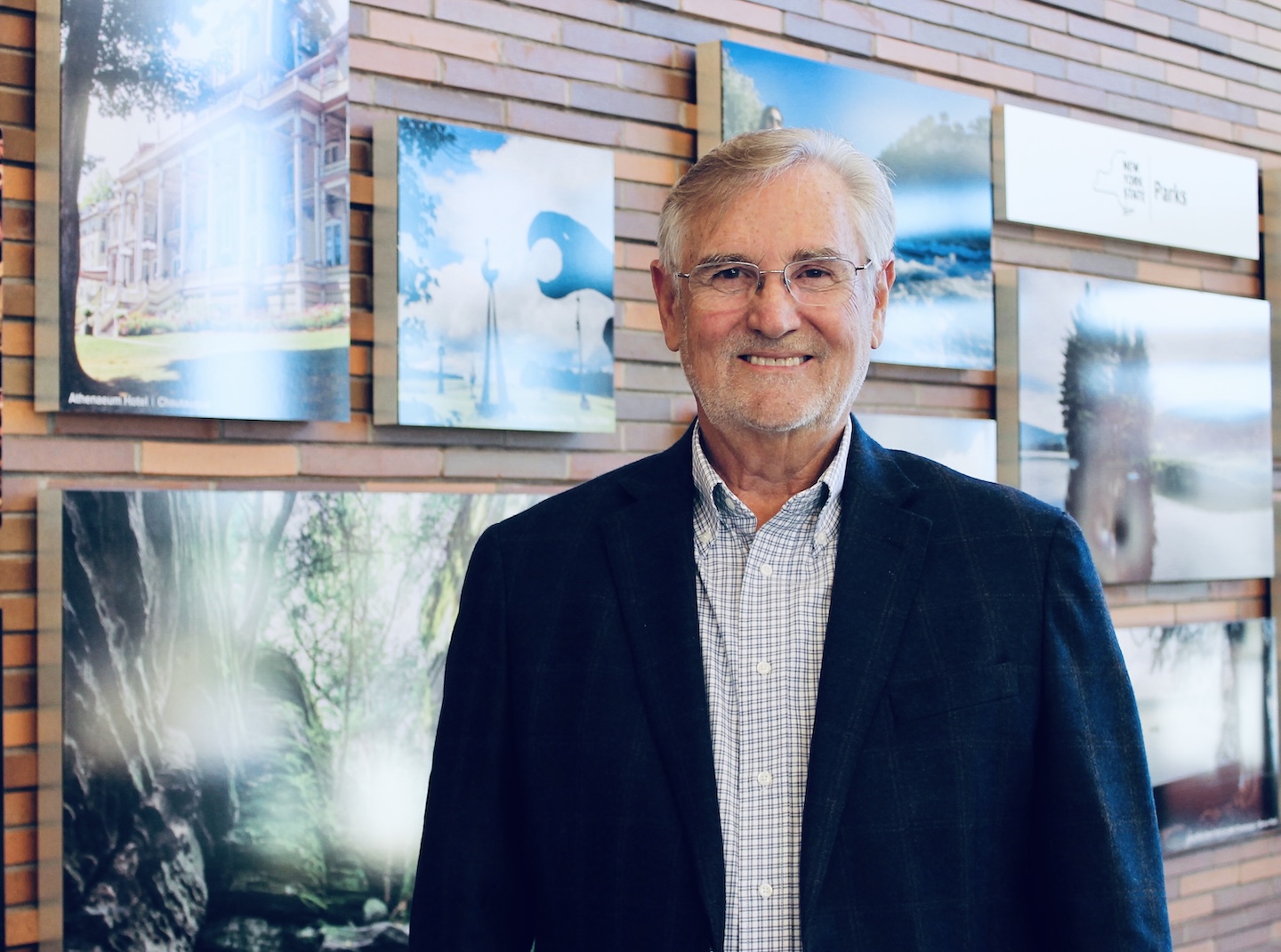
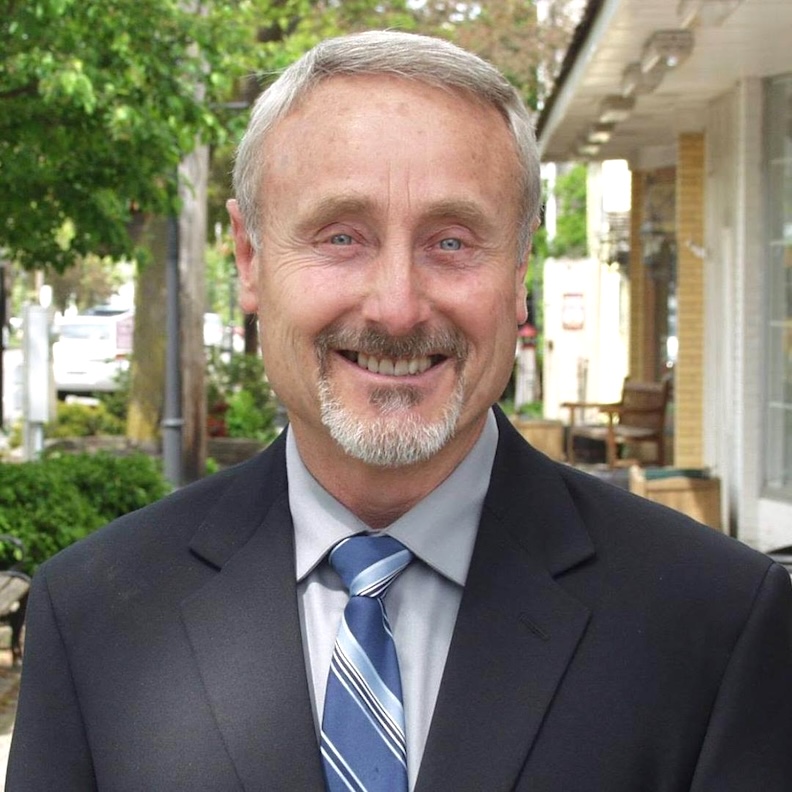
The Niagara River Greenway Commission has a new chairman: Grand Island resident Jim Sharpe.
Appointed in March, Sharpe brings decades of town government experience to the table in steering the statewide agency. He has served as a Town Board member and deputy supervisor of Grand Island. For many years he also has chaired committees for the town’s master plan, long-range planning and the recent recreation / senior services master plan. He also led the development and acceptance of the town’s Local Waterfront Revitalization Program.
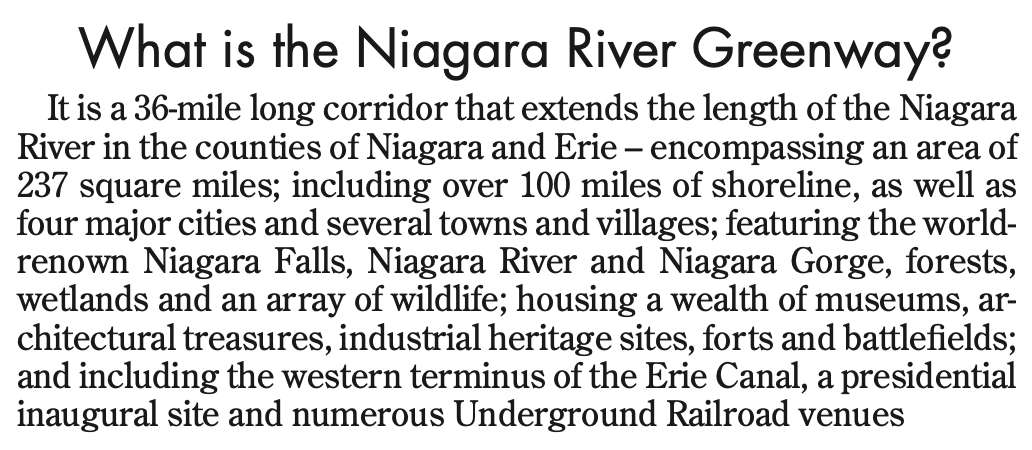
The Greenway corridor runs from Lake Erie to Lake Ontario. Hiking and biking along the more than 40 miles of the Shoreline Trail are an essential part of what the Greenway provides.
“The idea of improving public access through a trail system, on both land and water, along the river through the 13 communities from Buffalo to Youngstown is one of the most unique opportunities I've seen,” Sharpe said.
“It has been a rewarding challenge to work with the New York Power Authority, whose agreement provides $9 million a year to fund projects that develop that trail system across all 13 communities along the Niagara River.”
The Grand Island connection
Sharpe served a year as a commission member before his appointment as chair. He said former Greenway Commission members from Grand Island include founding member Paul Leuchner, as well as former town supervisors Peter McMahon and Mary Cooke.
Rob Belue, formerly of Grand Island, was the first executive director of the Greenway Commission.
The Greenway, established in 2004 by Gov. George Pataki, champions the cause of the Niagara River – its places, parks and landscapes.
There have been more than a half-dozen recent Greenway projects on Grand Island to preserve natural habitats and improve recreation options. (See breakout box).
The latest Greenway project was announced Oct. 7, when the Ecological Standing Committee awarded a $203,000 grant to restore the 38.3-acre Jim and Edna Braddell Preserve on Grand Island. Formerly an agricultural field, the preserve will be managed as grassland habitat that supports birds such as Bobolink, Savannah Sparrow and Northern Harriers. The Western New York Land Conservancy had purchased the grassland habitat in 2024.
Mixed reviews on Kayak launch plans
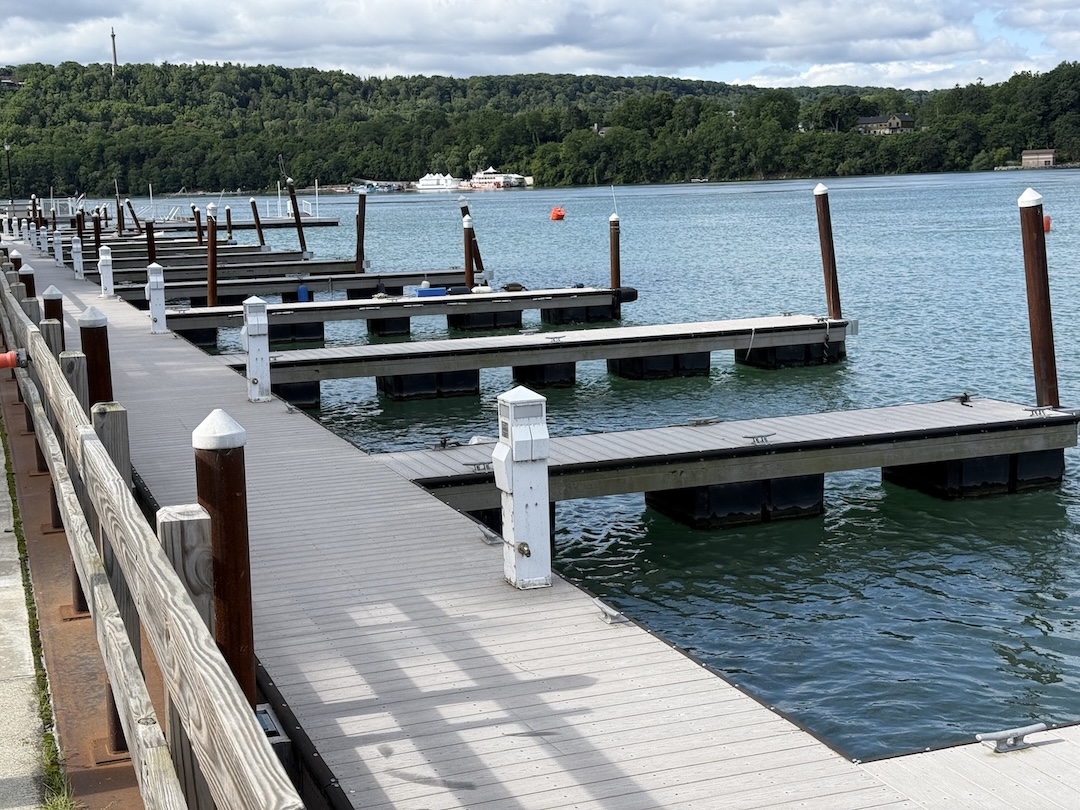
In November, the Greenway Commission will consider a proposal for a new kayak launch on Grand Island town land along East River near Ransom Road. The projected cost is $250,000, and project proponents say the benefit is for greater access to the Niagara River.
Greenway Community Engagement Director Michelle Lockett said, “The proposed kayak launch doesn’t just help Grand Islanders; it helps all kayakers who visit Grand Island and the river around the Island because there is no other landing point for kayakers on East River. It’s actually a safety concern, because if someone is trying to paddle from, say, Beaver Island / East River Marsh up to Buckhorn, there’s nowhere to stop … if they get tired or dehydrated.”
She also said the mission of the Greenway Commission is to bring more people out to the shoreline and the river. “That is what we’re all about is putting in water-accessible features, and kayak launches is one of them.”
“Fishing piers, bird-watching, obviously trails – anything along the water that helps people recreate near the river is what we’re trying to do.”
The kayak launch proposal can be found at: https://www.niagararivergreenway.com/_files/ugd/4994b4_248a51472ab24496a2527281caa4a9d1.pdf.
A petition drive has been launched against the proposed location of the kayak launch. The petition terms the proposed location as “hazardous.”
“East River Road, south of Ransom, is a serene and picturesque part of Grand Island, cherished by residents and visitors, alike. However, a new proposal threatens both the tranquility and safety of this area,” the petition reads.
“The neighborhood residents are deeply concerned about the town's plan to introduce a kayak launch at this location, forcing people to cross East River Road while carrying kayaks, then paddle around long docks and out into deep water, into a stretch of river that has heavy boat traffic.”
The petition suggests an alternative:
“The logical and responsible course of action is for local authorities to pause, reconsider this proposal, and identify alternative, safer locations for a kayak launch. One option would be the 8+ acres of waterfront the town owns nearby next to Spicer Creek. People would not have to cross the street or go out into deep water. It is the perfect location.”
The petition, which showed 115 signatures over the weekend, can be found at: https://www.change.org/p/oppose-hazardous-kayak-launch-on-east-river-road-grand-island-ny-residents.
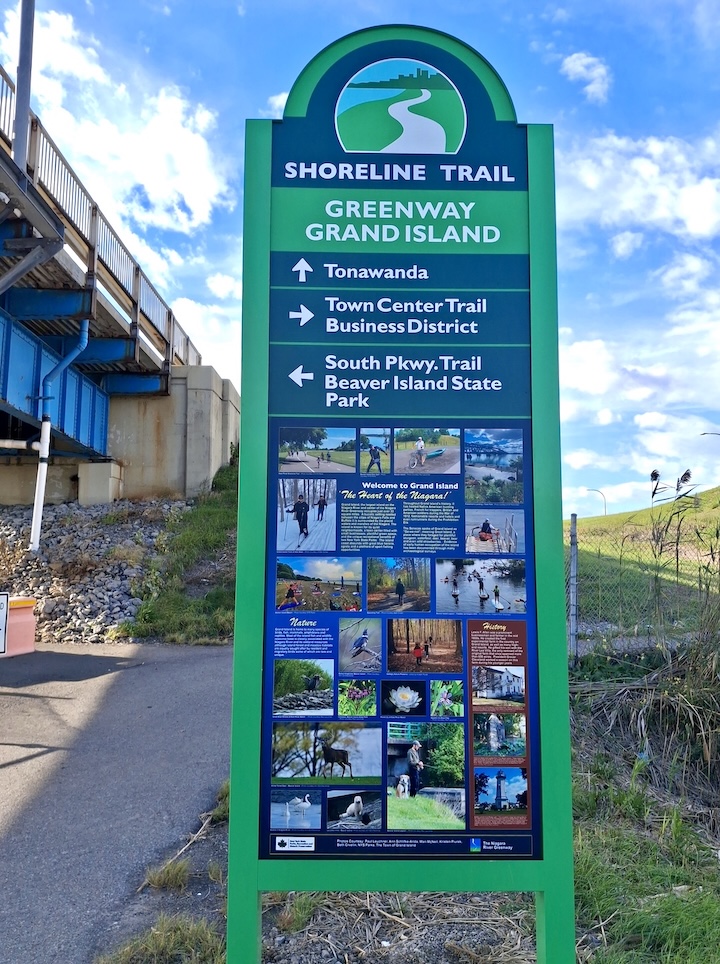
A sign at the foot of the South Grand Island Bridge marks the Shoreline Trail established by the Niagara River Greenway Commission and its 13 member municipalities. (Photo by Karen Carr Keefe)
••••••••
Shoreline Trail continuity
Many of the 13 communities served by the Greenway Commission have completed their portion of the Shoreline Trail. Grand Island has not. The goal is to have the trail connect the North and South bridges so there’s a continuous path across the Island for hikers and bicyclists, most likely along Grand Island Boulevard. But the current speed limit of 40 mph along the Boulevard is an obstacle in search of a solution.
That solution may be found in Grand Island’s recent adoption of the Complete Streets Policy. It allows the town to make changes to accommodate all users – not just motorists. Changes could include incorporating sidewalks, bike lanes, crosswalks, curb cuts, ramps, signage or traffic-calming measures.
Sharpe said being compliant under Complete Streets Policy “means that anybody – federal, state, county – that wants to do something with the roads and planning, they have to talk to the Town of Grand Island.”
The Greenway Mission
The Greenway mission statement is: “To restore the ecological health of the Niagara River and improve public access for all, while supporting the development of world-renowned scenic, natural, historic, cultural and recreational resources of the Niagara River Corridor.”
The Greenway blueprint can also bring opportunities to enhance tourism and economic revitalization for the communities in its path.
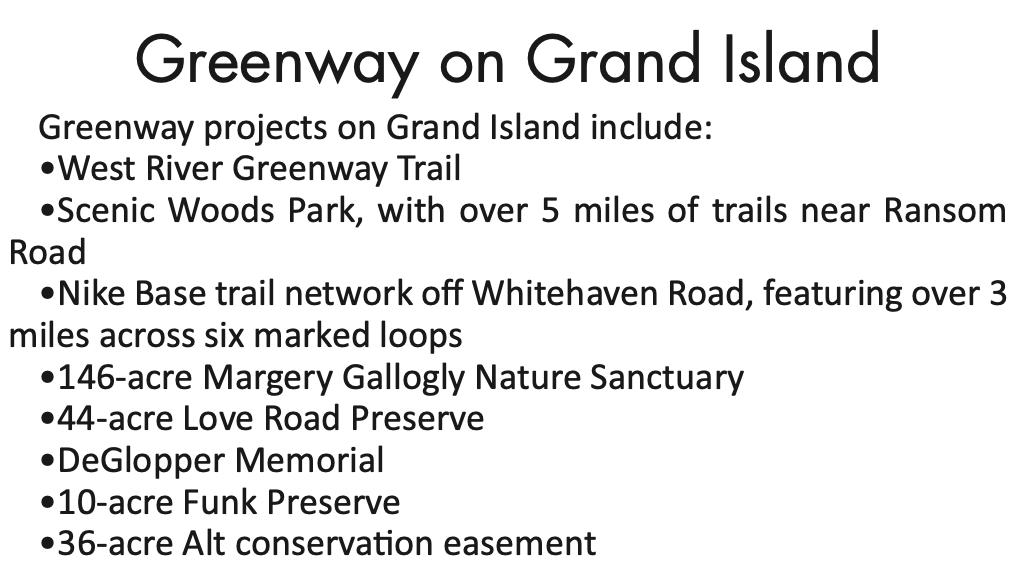
How the Greenway works
“It is an honor to have been appointed by the chairman to the Niagara River Greenway Commission, and to take part in moving an organization forward to implement the Greenway plan,” Sharpe said.
“I give a great deal of credit to the people serving on the commission today, and to those who served before them.”
The structure of the Greenway includes:
•Fourteen commission members, eight of whom are appointed variously by the governor, the state Assembly and Senate; and six “ex-officio” members from state agencies. Sharpe was appointed to the commission by Gov. Kathy Hochul and chairs it in an unpaid capacity.
•Three paid staff members, including Executive Director Greg Stevens; Administrative Director Lisa Vitello; and Lockett.
•Four standing committees to review project proposals and disburse funding from settlement agreements with the New York Power Authority related to the 50-year license received by NYPA in 2007 for the operation of the Niagara Power Project.
Praise for the planner
Lockett praised Sharpe’s initiatives to improve communication between the members of the commission and establish greater coordination in achieving Greenway goals.
“Jim Sharpe is a true benefit to the Niagara River Greenway Commission and particularly as chair,” she said. “He has worked tirelessly since taking on the role of chair, reaching out to all our municipal, agency and nonprofit partners to understand their needs and how they relate to the Greenway’s mission.”
“He has sparked more engagement with the commissioners and the Greenway standing committees, as we work to better align collaborations,” she said. “Jim’s experience with planning and working with a wide variety of people has been an asset to our team, and I look forward to working with him as we take the Niagara River Greenway Commission to the next level.”
In 2018, Sharpe received both the Western New York and the New York State Planning Award for Community Planning.
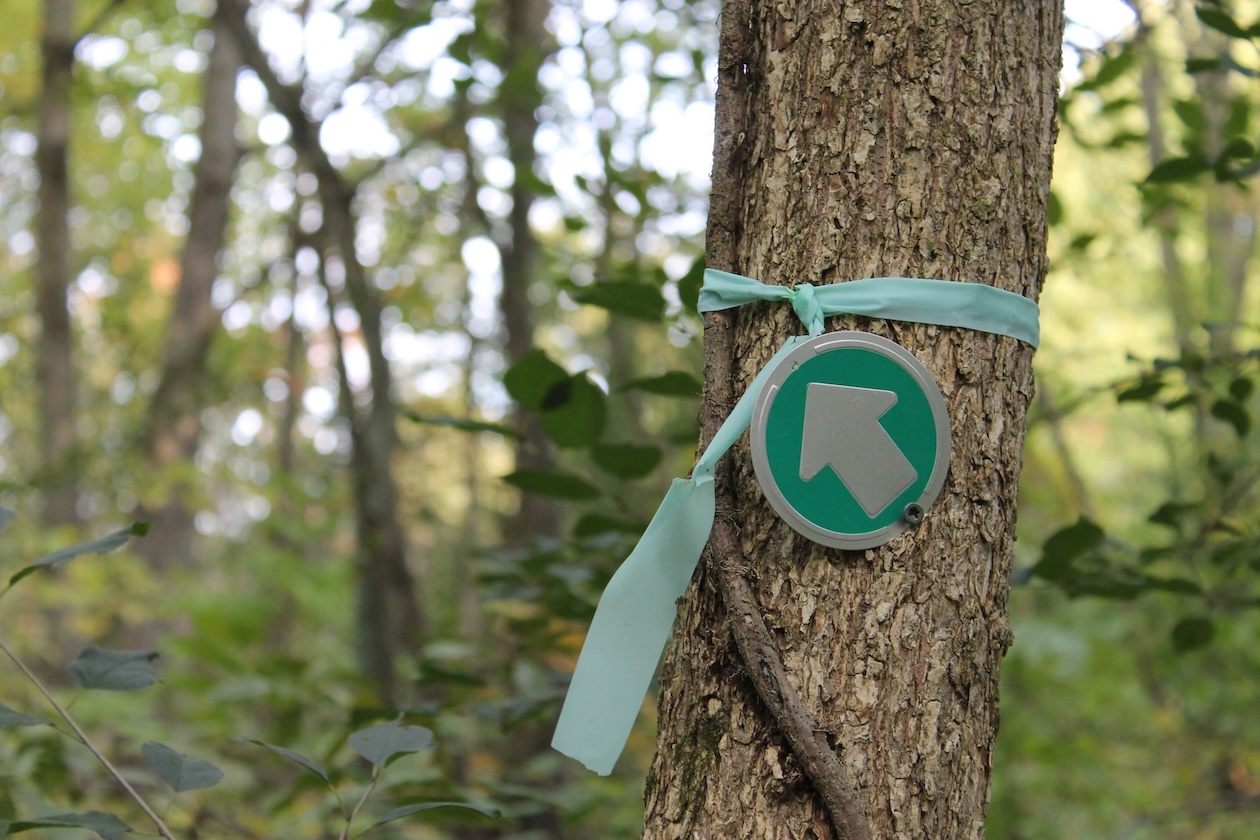
A ribbon tied to a tree trunk marks a spot near the Phase 2 Scenic Woods trail entrance on Grand Island. The trail head is just north of the intersection of River Oaks Drive and Hazelwood Lane. (Photo by Karen Carr Keefe)
••••••••
Sharpe: Success is about process
Sharpe has a method that runs like a river through the work he has done, and he credits it with his success in planning.
“If there's not procedures and there's not an accountability, then I'm not comfortable. And there will be accountability. And there will be financial accountability. And there will be structure. And there will be a process,” he said. “That's why I'm here. That is what I do.”
Sharpe said that has been his credo on all the committees he has chaired, as well as his work in being deputy town supervisor.
“There's a process and a method to what is done. And if I step out of that process, the process still exists. The structure still exists. The discipline still exists,” Sharpe said.
Sharpe’s initiatives
Sharpe put his planning skills to use at the Greenway, encouraging fellow commissioners to work collaboratively under his direction.
The results include:
•Working with the commissioners and staff to establish a five-year plan that includes the governor’s objectives and an infusion of $200,000 into the Greenway budget.
•Switching the Greenway fiscal year from a Jan. 1 start to an April 1 start, to better match with the state’s budget process.
•Adding a work session prior to voting and having the chair vote last. These measures were designed to empower commissioners and make them part of management.
•Establishing bylaws for the commission and job descriptions for each of the officers and commissioners.
Getting to know you
Upon assuming the chairmanship, Sharpe introduced himself and held two-hour interviews with each of his fellow commissioners to discuss their views on the strengths and weaknesses of the organization and their individual roles.
“And that's my fun part – understanding them, and them understanding me. So, all of a sudden now it’s a team. The camaraderie behind it is kind of that it's a mission for most of these people. It’s not just a job or a place they have to report to five times a year,” Sharpe said.
“My power is basically being around some fantastic people with great talent. And when I look at the Greenway Commission itself, to be sitting with these people who have such expertise – and their drive and their vision – they overwhelm me. And I'm just a catalyst here to see to it their voices are heard.”
Equitable fund distribution
Sharpe said he has been careful to avoid any conflict of interest as chair. He takes precautions to ensure that all 13 communities along the Greenway have equal access to the project application process, with no favoritism toward his Grand Island hometown.
“The project came up for the conservation property. I said, ‘I may have to abstain from this due to the fact that it's on Grand Island,’ ” Sharpe said. He noted his fellow commissioners told him, “ ‘No, you’re voting.’ ”
When considering a Grand Island project, Sharpe said the litmus test to determine a possible conflict is: “Are you at all benefiting from that project other than it being in your community? Are you getting financed from it? Are you a landowner (of the property under consideration)? Are you getting any benefit by the land?” If so, he said, “That's when you recuse yourself.”
Community support a key factor
Sharpe said applicants for Greenway projects have a greater chance of success if they can demonstrate community support and some matching funds in addition to the Greenway money they seek.
He said the Scenic Woods park and trails project near Ransom Road on Grand Island was nearly rejected because the town’s applications for Greenway funding and state funding didn’t align.
“When you have a benchmark for the Greenway and you have a benchmark for the state, if they don't line up, it’s a jigsaw puzzle,” Sharpe said.
He noted that, as a planner, he was able to match up the numbers, then approval followed.
Sharpe said he advised the town, “You're going to have to take the leap and put the money in for the state side, and then the state will pay you back. But you've got to put the money in to get this space lined up with this space.”















1859 Whitehaven Road, Grand Island, NY 14072
Phone: 716-773-7676
Fax: 716-773-7190