+70
°
F
+74°
+58°
Niagara Falls
Thursday, 16
See 7-Day Forecast
Featured News - Current News - Archived News - News Categories
By Jessica Minicucci
Head of Marketing & Membership
Castellani Art Museum of Niagara University
For generations, museums have thought about traveling collections quite literally.
An artwork leaves one institution, is carefully packed into a crate, transported to another museum and installed in a new gallery. Loans and traveling exhibitions remain an important part of how museums share their collections, but they are no longer the only way a collection can travel.
Today, the question may be less about how we move an object and more about how we move the ideas surrounding it.
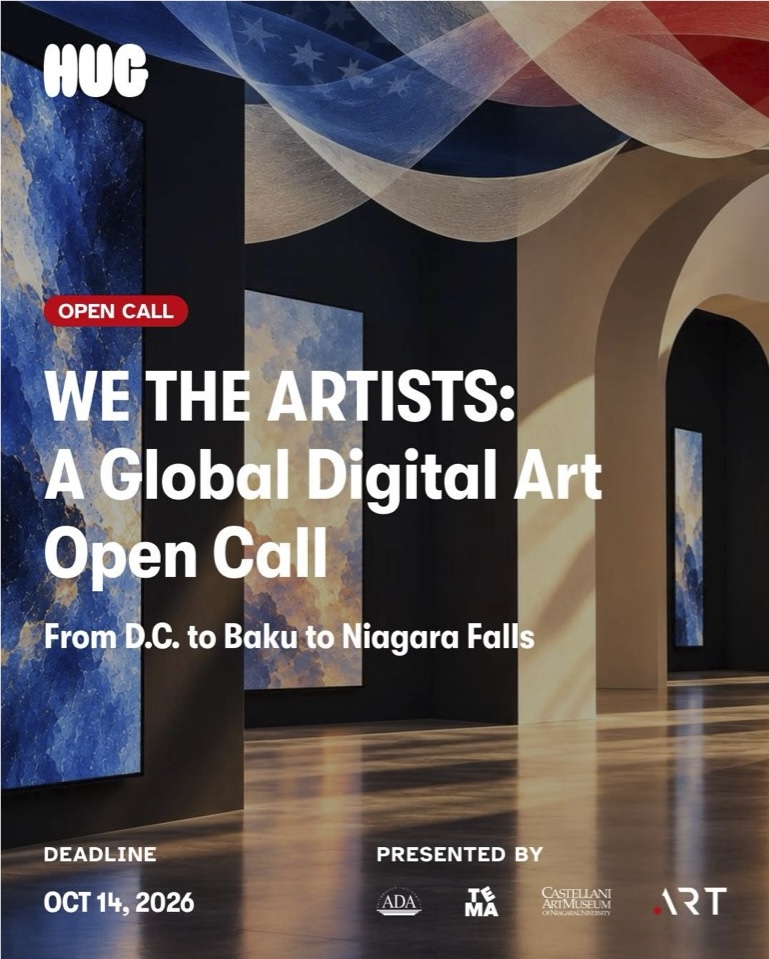
At the Castellani Art Museum of Niagara University, we are exploring that question through “WE THE ARTISTS,” an international collaboration led by .ART that grew from our exhibition “USA250: Celebrating the American Vision.”
The exhibition uses works from CAM’s permanent collection to consider how generations of artists have defined, challenged and reimagined the idea of America. Through this collaboration, that conversation is now moving beyond our galleries in Niagara Falls – to Washington, D.C.; Baku, Azerbaijan; Brussels, Belgium; and audiences connected across an international network.
More than 300 works from CAM’s permanent collection will be shared digitally through an interactive touchscreen experience at the ADA University Foundation in Washington, D.C. The larger initiative connects that experience with ADA University in Baku, its partner campus in Brussels and Baku Art Week, creating opportunities for students, artists and audiences in multiple countries to participate in the conversation.
An international open call, meanwhile, invites contemporary digital artists to respond to a broader question inspired by the exhibition: What does the American vision mean today?
What interests me most about the project, however, is not simply the technology.
It is what collaboration makes possible.
Museums hold extraordinary collections, but every institution also works within boundaries. There are geographic boundaries, financial boundaries, staffing limitations and the very real physical limitations involved in caring for and moving works of art.
A partnership can change the shape of those boundaries.
CAM brings its collection, exhibition framework and museum expertise to this project. .ART brings a global network and expertise within the digital art community, while other collaborators contribute technology, exhibition space and opportunities to connect with audiences in different places.
No single organization has to be everything.
That idea feels particularly important for university, regional and smaller museums.
Innovation is often discussed as though museums must constantly build something new: a new platform, a new technology department, a new program or another layer of infrastructure. For institutions with limited resources, that can make innovation feel inaccessible before the conversation even begins.
But perhaps innovation can also mean looking differently at what we already have.
A museum may already have the collection. It may already have the curatorial work, exhibitions, educators and stories. Another organization may have the technology, audience, space or expertise that allows those resources to be experienced differently.
The opportunity comes from connecting them.
For a university museum near Niagara Falls, there is something remarkable about considering the journey a collection can now take without the objects themselves ever leaving the museum.
An artwork can remain safely in CAM’s collection while its image and the ideas surrounding it become part of a conversation in Washington. That conversation can continue with university students in Baku, connect with participants in Brussels and reach artists from around the world through a digital open call.
That is a different kind of traveling exhibition.
Digital access will never replace standing in front of an original work of art, nor should it try to. The physical museum remains essential. But extending a collection digitally can create another doorway into it.
Someone encountering a CAM artwork thousands of miles from Niagara Falls may never have known that the original resides in a university museum in Western New York. That first encounter can lead to curiosity about the artist, the collection, the exhibition and, ultimately, the museum itself.
Rather than replacing the museum experience, technology can create another pathway back to it.
There is also something valuable about allowing collections to enter conversations we may not have anticipated when the works were acquired.
Collections are not static simply because the objects themselves remain safely inside museum walls. Their meanings continue to change as new generations encounter them, question them and place them alongside contemporary ideas.
When we allow artists and audiences in other communities – and other countries – to enter that conversation, the collection begins to function differently. It becomes not only something we preserve, but something we activate.
That requires museums to become comfortable with collaboration. It requires trust in outside expertise while remaining thoughtful stewards of the collections in our care. It requires conversations about artist rights, interpretation, technology and how institutional responsibilities are shared.
Those conversations are part of the innovation, too.
For CAM, “WE THE ARTISTS” is an experiment in what can happen when a collection rooted in one place is given an opportunity to participate in a much-larger conversation.
From Niagara Falls to Washington, D.C., Baku and Brussels, the geography of this project demonstrates something that feels increasingly relevant to museums of all sizes: The reach of a collection no longer has to be defined by the location of the building that houses it.
We are still learning from this experiment.
But one lesson is already becoming clear: A museum does not necessarily need to become bigger for its reach to become broader.
Sometimes, it simply needs the right collaborators.
Our buildings will always matter. The experience of encountering an artwork in person will always matter. But museum walls do not have to define the boundaries of the conversations our collections can inspire.
Perhaps the future is not about choosing between the physical museum and the digital world.
Perhaps it is about building better bridges between them.


1859 Whitehaven Road, Grand Island, NY 14072
Phone: 716-773-7676
Fax: 716-773-7190